
TL;DR
The best chiropractor for you is the one with verifiable credentials, a clear explanation of what is specifically causing your pain, transparent cost and payment terms, and patient outcomes you can check rather than star ratings alone. In Draper and Kaysville, that means looking at six things before you book: credentials, treatment philosophy, technology used, communication style, patient outcomes, and cost structure.
You typed "best chiropractor near me" because you already tried resting, stretching, and maybe an over-the-counter pain reliever, and the pain came back. The honest answer is that there is no single best chiropractor for everyone. There is a best chiropractor for your specific problem, your schedule, and how you want to be treated. A good fit for a weekend athlete with a sore shoulder is not necessarily the right fit for someone recovering from a car accident or managing chronic low back pain. What does matter, no matter your situation, is a short list of things you can actually check before you book an appointment: credentials, how the clinic explains your problem, what techniques they use, how they communicate, and what past patients say happened after treatment. Here is how to work through that list for chiropractors in Draper, Kaysville, and the wider Salt Lake County area.
What to Look For in a Chiropractor (Draper, Kaysville, and Beyond)
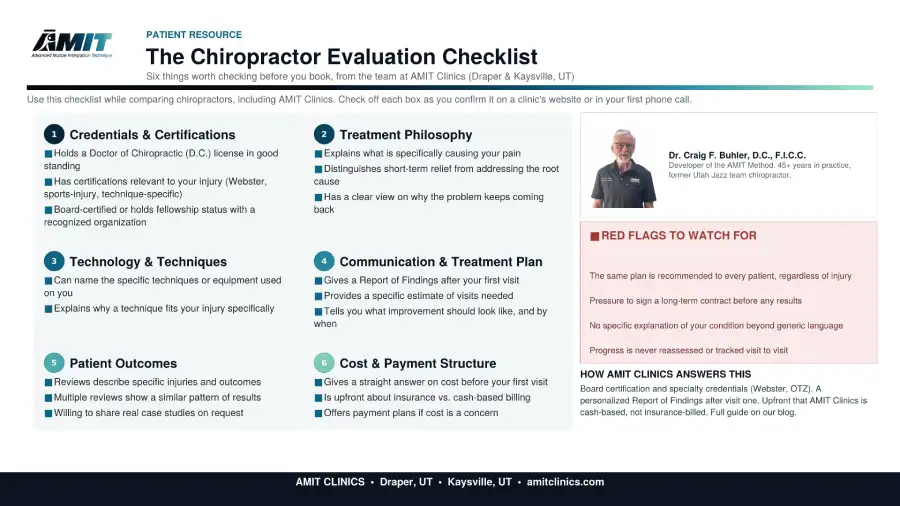
Every chiropractic clinic will tell you they are the best. What separates a genuinely strong chiropractor from an average one comes down to six things you can verify in five minutes on a clinic's website or in your first phone call: credentials, treatment philosophy, technology, communication style, patient outcomes, and cost structure. Walk through each one before you commit to a treatment plan.
Credentials and Specialized Certifications
Every licensed chiropractor holds a Doctor of Chiropractic (D.C.) degree, but that is the baseline, not the differentiator. Look for additional certifications relevant to your specific injury, such as Webster certification for prenatal care, sports-specific credentials, or technique-specific certifications like OTZ (Occipital Tension Zone) for frozen shoulder. Board certification through the National Board of Chiropractic Examiners and fellowship status with organizations like the International College of Chiropractors both signal a chiropractor who has invested well beyond the minimum requirement to practice. At AMIT Clinics, for example, Dr. Craig Buhler, D.C., F.I.C.C., developed the Advanced Muscle Integration Technique after more than 45 years in clinical practice, including more than two decades as the Utah Jazz team chiropractor, and Dr. Alec Russell, D.C., MSFN, holds Webster and OTZ certifications on top of a master's degree in functional nutrition.
Treatment Philosophy: Symptom Relief vs. Root-Cause Care
Ask any clinic one direct question: are you treating my symptom, or are you finding out why the symptom keeps coming back? Some chiropractic visits are built around a quick adjustment that relieves pain for a day or two. Others start with an actual assessment of which muscles have stopped firing correctly after an injury, why a joint keeps compensating, or why the same recurring pain returns every few months. Neither approach is inherently wrong, but they solve different problems. If you have already tried physical therapy or a few rounds of adjustments and the pain returns, root-cause care usually gets you further than another quick fix. This is one of the biggest differences between traditional chiropractic and a method like AMIT, which was built specifically around finding and correcting the muscle inhibition and compensation patterns that keep pulling old injuries back to the surface. It is worth reading about the AMIT Method page [internal link: /the-amit-method] before deciding which approach fits your situation.
Technology and Techniques Used
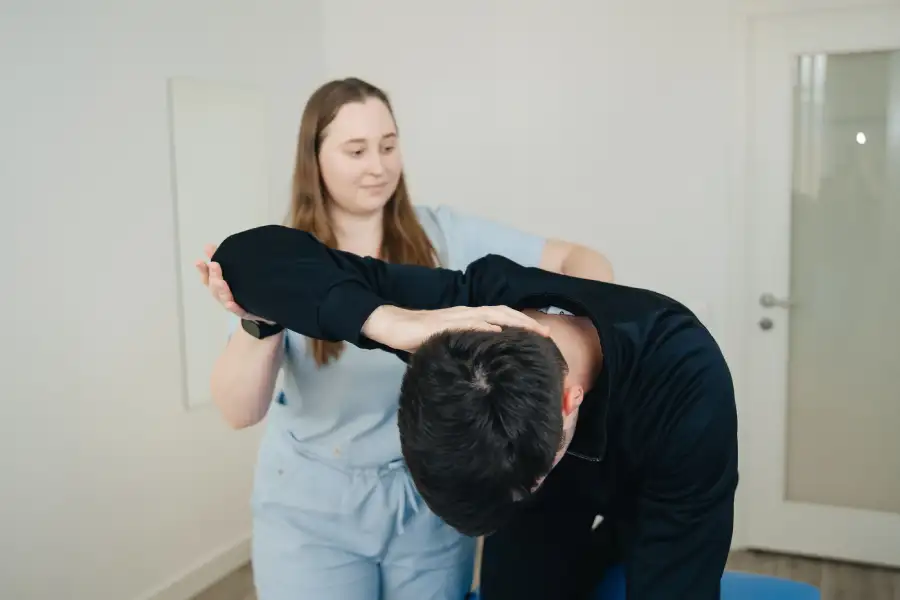
A chiropractor's toolkit tells you a lot about how they diagnose and treat. Ask what is actually available at the clinic: manual adjustments only, or additional technology like laser therapy, spinal decompression tables, or muscle testing to identify inhibited muscle groups. None of these replace a skilled clinician's hands, but they widen what a chiropractor can offer beyond a standard adjustment, especially for injuries that have not responded to basic treatment. A clinic that can explain, in plain language, why they chose a specific technique for your specific injury is generally more trustworthy than one that applies the same routine to every patient who walks in.
Communication and Personalized Treatment Plans
You should leave your first visit with more than an adjustment. A strong chiropractor gives you a clear explanation of what is actually wrong, in terms you understand rather than only anatomical jargon, a specific plan for how many visits you will likely need, and a way to track whether the plan is working. If a clinic cannot explain why they are recommending a particular number of sessions, or cannot tell you what improvement should look like by session three or four, that is worth asking about directly. A written Report of Findings after your first visit, outlining exactly what was found and what the plan addresses, is one example of what that transparency looks like in practice.
Real Patient Outcomes and Reviews
Online reviews are useful, but read them for specifics, not star ratings. A five-star review that says "great staff" tells you less than one that describes a specific injury, how long treatment took, and what changed. Look for patterns across reviews: are multiple patients describing similar injuries getting similar results? Do reviews mention long-term outcomes, or only how the visit felt? If a clinic has treated recognizable athletes, worked with sports teams, or publishes real case studies you can read in detail, that is a stronger signal than a review count alone.
Location, Scheduling, and Convenience
The best chiropractor on paper is not much help if you can never get an appointment or the drive is long enough that you skip sessions. If you are searching from Draper, Kaysville, Herriman, or elsewhere in Salt Lake County, check actual drive times to both locations, not just which one shows up first in search results. Ask about appointment availability for your own schedule rather than a generic "we have openings," and confirm whether you will see the same doctor at each visit or a different one every time. Consistency with a single provider tends to produce better outcomes for anything beyond a single acute issue.
Cost, Payment Structure, and Insurance
Cost and payment structure vary a lot between clinics, and it is worth asking about before your first visit, not after. Some chiropractors bill insurance directly; others, including AMIT Clinics, operate on a cash basis rather than billing insurance for treatment. That is not automatically better or worse, but it changes how you should budget and what to ask upfront: what an initial evaluation costs, what a full treatment plan typically runs, and whether payment plans are available. A clinic that gives you a straight answer to those questions before you commit is more trustworthy than one that avoids specifics until you are already in a treatment chair. Our FAQs [internal link: /faqs] page covers exactly how billing and payment work at AMIT Clinics if you want the details before you call.
Red Flags to Watch For When Choosing a Chiropractor
A few patterns are worth walking away from. Be cautious of a clinic that recommends the same treatment plan, often a fixed number of visits per week for months, to every patient regardless of their injury. Be cautious of pressure to sign a long-term contract before you have had a single visit or seen any results. Be skeptical of a chiropractor who cannot explain, specifically, what is causing your pain in terms beyond "your spine is out of alignment." And pay attention to whether your pain, mobility, or specific symptoms are being tracked and reassessed at each visit, or whether every appointment feels identical regardless of progress. None of these signs mean a clinic is dishonest, but they are worth asking about directly before committing to months of visits.
Why Patients in Draper and Kaysville Choose the AMIT Method

AMIT Clinics was built around a specific answer to the root-cause question above. The Advanced Muscle Integration Technique, developed by Dr. Craig Buhler over more than four decades of clinical practice, identifies which specific muscles have stopped firing correctly after an injury and reactivates them directly, rather than relying on repeated adjustments to manage a symptom that keeps returning. Dr. Buhler's background includes more than 20 years as the Utah Jazz team chiropractor and two decades working with the US Ski Team, and Dr. Alec Russell brings sports injury and prenatal care expertise with Webster and OTZ certifications. Patients come to the AMIT Method after other treatment, physical therapy, standard chiropractic adjustments, or even surgery consultations, has not resolved a lingering injury, because the approach specifically targets old compensation patterns that other treatment often misses. If you want to see exactly how the method works and how it differs from traditional chiropractic care, the AMIT Method page walks through the process step by step.
Chiropractor Near You: Draper vs. Kaysville
AMIT Clinics has two Utah locations, one in Draper and one in Kaysville, both offering the same AMIT Method treatment and the same team-based care model. If you are closer to the south end of Salt Lake County, the Draper location is typically the shorter drive; patients in Davis County or northern Salt Lake County usually find Kaysville more convenient. Both clinics use the same initial evaluation process, so the right choice usually comes down to which drive fits your schedule better, not which location is "better." See hours, address, and what to expect at each clinic on the Draper location page and the Kaysville location page.
Frequently Asked Questions
What should I look for in the best chiropractor near me?
Look for verifiable credentials beyond a basic D.C. license, a clear explanation of what is specifically causing your pain, transparency about cost and payment structure, and patient outcomes you can verify rather than star ratings. The right chiropractor for you also depends on your specific injury and how you want to be treated, so the "best" one is the one whose approach matches your situation.
What is the difference between a chiropractor and the AMIT Method?
Traditional chiropractic focuses primarily on spinal and joint adjustments. The AMIT Method adds a specific process for identifying and reactivating muscles that have stopped firing correctly after an injury, which is often why pain keeps returning even after adjustments.
How many chiropractic visits will I need before I feel better?
This depends on the injury, how long you have had it, and which treatment approach you choose. A strong chiropractor should give you a specific estimate after your first evaluation, not a generic ongoing schedule.
Do chiropractors in Draper and Kaysville accept insurance?
It varies by clinic. AMIT Clinics operates on a cash basis rather than billing insurance directly. Our FAQs page covers the details of how billing and payment work.
Is it normal to feel sore after a chiropractic visit?
Mild soreness for a day or two is not unusual, especially early in treatment, but pain that gets significantly worse or lasts more than a few days is worth discussing with your provider directly rather than assuming it is expected.
Should I choose a chiropractor based on reviews alone?
Reviews are a useful starting point, but read them for specific details, injury type, treatment length, and outcome, rather than star ratings alone, and combine them with a direct conversation about credentials and treatment philosophy before booking.
Book Your Consultation
Choosing a chiropractor is easier once you know what to actually check: credentials, treatment philosophy, technology, communication, patient outcomes, and cost. Most clinics will answer these questions directly if you ask, and how they answer tells you almost as much as the answer itself. If you are in Draper, Kaysville, or anywhere in Salt Lake County and want to see how the AMIT Method approaches these six things differently than traditional chiropractic care, book a consultation at either location and bring your questions with you.