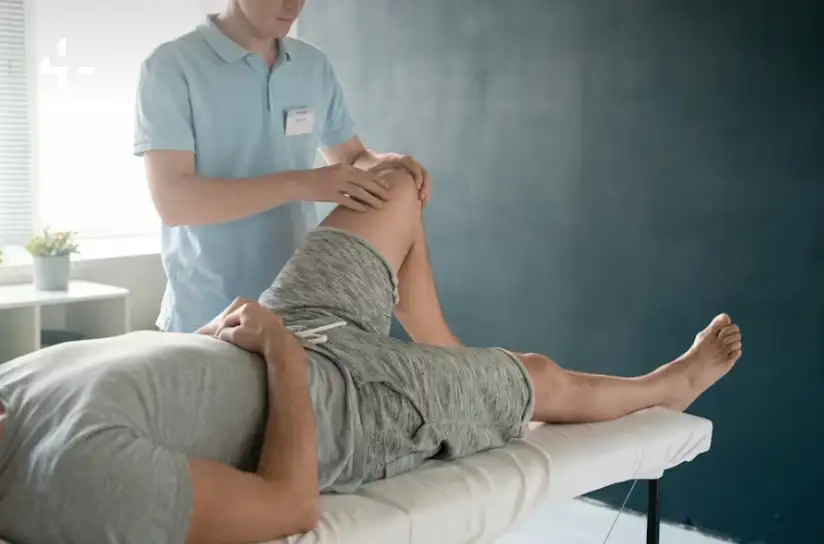
If you're searching for an injury recovery chiropractor near you in Draper or Kaysville, Utah, there's a good chance rest has already let you down. You took the time off. You iced it. You waited. And the injury either came back, never fully resolved, or left you moving just a little differently than before — a restriction here, a weakness there, a quiet awareness that the joint isn't quite right. That experience is not a failure of patience. It's a failure of the protocol.
Rest reduces pain by removing load from the injured area. It does not restore the neurological function that was disrupted by the injury. And that distinction — between quieting a symptom and restoring a function — is the difference between recovery that holds and recovery that doesn't. At AMIT Clinics in Draper and Kaysville, active recovery means treating what rest cannot reach: the inhibited muscles that shut down at injury and stay shut down until someone addresses them directly.
The Issue with Solely Resting
Rest quiets the pain signal. It reduces inflammation, removes load from the injured structure, and allows the initial tissue healing phase to proceed. These are real benefits — and rest is appropriate in the acute phase of most injuries. What rest cannot do is restore muscle inhibition.
Muscle inhibition — the neurological shutdown of a muscle in direct response to injury, pain, or joint stress — is the mechanism that drives recurring injury and chronic post-injury dysfunction. When a muscle inhibits at the time of injury, it stops contracting at full strength. The nervous system routes movement around it. Adjacent muscles compensate. The injured area heals structurally — the tissue repairs, the swelling resolves, the pain quiets — but the inhibited muscle remains offline. The compensation patterns remain active. And the next time load is applied to that joint or movement chain, the same mechanical vulnerability that caused the original injury is still present. This is why injuries recur.
Rest provides no neurological input to restore inhibited muscle activation. Stretching does not restore it. Strengthening exercises applied to a muscle that has inhibited typically recruit the compensating muscles instead, reinforcing the pattern rather than correcting it. Genuine recovery requires identifying which muscles inhibited and applying the specific treatment that restores their activation — which is exactly what rest alone will never accomplish.- Breaking the Pain Cycle
Much like a deflated tire can’t fix itself while driving, your body needs active intervention to truly heal.
Breaking the Pain Cycle
The recurring injury cycle follows a predictable pattern. An injury causes muscle inhibition. Rest reduces pain, but the inhibition remains. The patient returns to activity. The compensating muscles, now doing the work of both themselves and the inhibited muscle, develop their own strain. Either the original injury site reloads abnormally (because the protective muscle is still offline) and re-injures, or the compensating muscles fail under the accumulated load. A new injury appears — often in a different location — and the cycle begins again.
Breaking this cycle requires interrupting it at the inhibition stage — the only stage where the mechanical vulnerability is actually being created. AMIT-based treatment at our Draper and Kaysville clinics does exactly this: identifies the specific muscles that inhibited at the time of original injury, restores their neurological activation, and removes the compensation pattern that has been setting up re-injury. The pain cycle doesn't break by managing symptoms. It breaks when the inhibited muscle comes back online.
AMIT's Holistic Approach
The Advanced Muscle Integration Technique (AMIT) — a specialized clinical system for identifying and restoring neurologically inhibited muscles — is what active recovery looks like when it's done with precision. Rather than applying movement and load and hoping the body finds its way back to full function, AMIT starts by mapping exactly where function was lost.
Using manual muscle testing, AMIT practitioners at our Draper and Kaysville clinics identify which muscles inhibited at the time of injury — regardless of how long ago that injury occurred. They then apply targeted neurological treatment to restore the muscle's activation, re-establishing the proper movement and stabilization patterns before returning the patient to activity. The result is a recovery that is complete at the neuromuscular level, not just at the structural level. The muscle is back online. The compensation pattern has unwound. And the mechanical vulnerability that caused the original injury has been corrected — not managed.
Why Rest Fails for These Common Injuries — and What Works Instead
Here's how the rest-only failure pattern plays out for the injuries we see most often at AMIT Clinics in Draper and Kaysville:
Ankle Sprains
Ankle sprains are the most commonly rested injury in sport — and the most commonly re-injured. The reason is consistent: the peroneal muscles and deep ankle stabilizers that inhibit at the moment of the sprain never get restored. The ankle heals structurally, passes a basic functional test, and returns to activity with an uninhibited appearance. But the stabilizing muscles are still offline. The first lateral challenge to the ankle produces the same instability that caused the original sprain. AMIT assessment of ankle sprains typically identifies 3–5 inhibited muscles that standard rehabilitation never tested — and restoring them eliminates the recurrence pattern entirely.
Shoulder Injuries
Shoulder injuries — whether rotator cuff strains, AC joint sprains, or labral irritation — produce immediate inhibition in the deep rotator cuff muscles and the periscapular stabilizers that protect the joint through range of motion. Rest and gentle mobility work allow the pain to resolve, but the inhibited muscles remain offline. Return to overhead activity loads the shoulder through a compensation pattern — the superficial deltoid and upper trapezius doing work that should be distributed across the full rotator cuff. The impingement, clicking, and recurring pain that follows is not a new injury. It's the original inhibition pattern re-expressing under load.
Knee Injuries
ACL sprains, meniscal irritation, and patellofemoral pain all produce quadriceps inhibition — the neurological shutdown of the quad that the nervous system uses to protect the knee from further loading. This inhibition is well-documented in sports medicine research and is the primary driver of ACL re-injury rates. Rest reduces swelling and pain, but quadriceps inhibition typically persists until it is specifically addressed. Athletes who return to sport with the quad still inhibited compensate through the hamstring and hip musculature — a pattern that loads the knee asymmetrically and creates the mechanical conditions for re-injury.
Back Injuries and Overuse Conditions
Back injuries managed with rest — whether acute muscle strains, disc-related pain, or the vague 'I tweaked it' presentation — reliably produce gluteal and deep spinal stabilizer inhibition that outlasts the pain. The patient feels better. They return to activity. The lumbar spine resumes bearing loads it should be sharing with a functioning gluteal and stabilizer chain. Within days or weeks, the familiar pain returns. AMIT assessment identifies the specific muscles that inhibited and restores them before load is reintroduced — producing recovery that the rest cycle never achieved.
Frequently Asked Questions About Injury Recovery & AMIT Active Rehabilitation
Why do injuries keep coming back even after they seem to heal?
Injuries recur because muscle inhibition — the neurological shutdown of muscles surrounding the injured area — persists through rest and standard rehabilitation. When a muscle inhibits at injury, adjacent muscles compensate, creating a mechanical vulnerability that reloads the original injury site when activity resumes. The tissue heals but the inhibition remains, so the same movement pattern that caused the first injury causes the second. AMIT-based treatment at AMIT Clinics in Draper and Kaysville identifies and restores the specific inhibited muscles, removing the recurring vulnerability rather than just relieving the symptom.
Is rest bad for injuries? Should I avoid resting?
Rest is appropriate and beneficial in the acute phase of injury — it reduces inflammation, protects damaged tissue, and allows initial healing to proceed. The problem is not rest itself; it's rest as the complete recovery strategy. Rest reduces pain but does not restore muscle inhibition. Once the acute phase passes (typically 48–72 hours for most soft tissue injuries), active neuromuscular rehabilitation is necessary to restore the inhibited muscles that rest leaves offline. Continuing to rest beyond the acute phase delays restoration and allows compensation patterns to solidify.
What is active recovery and how is it different from rest?
Active recovery — the restoration of muscle function, neuromuscular activation, and movement patterns following injury — addresses what rest cannot. Rest removes load; active recovery restores neurological function. At AMIT Clinics in Draper and Kaysville, active recovery means using the Advanced Muscle Integration Technique to identify which muscles inhibited at injury and apply the specific treatment that restores their activation — before returning the patient to full activity. The result is recovery that is complete at the neuromuscular level, not just structurally pain-free.
What is the AMIT technique for injury recovery?
The Advanced Muscle Integration Technique (AMIT) is a clinical system for identifying and restoring inhibited muscles — muscles that neurologically shut down at the time of injury and remain offline through rest and standard rehabilitation. AMIT uses manual muscle testing to locate the specific inhibited muscles, then applies targeted neurological treatment to restore their activation. For injury recovery, this means the mechanical vulnerability that caused the original injury is corrected, not just managed — which is why AMIT-based recovery produces significantly lower recurrence rates than rest-and-rehab protocols alone.
How long does injury recovery take with AMIT?
Recovery timelines depend on the injury type, how long the inhibition has been present, and how extensive the compensation patterns have become. Acute injuries treated promptly — within weeks of occurrence — typically respond within 4–8 AMIT sessions. Injuries that have been rested and re-injured multiple times, or that have produced long-standing compensation patterns, typically require 8–16 sessions for full neuromuscular restoration. Our muscle bundle packages at AMIT Clinics are structured around these timelines, providing the treatment consistency that full recovery requires.
Where can I find an injury recovery chiropractor near me in Draper or Kaysville, Utah?
AMIT Clinics has locations in both Draper and Kaysville, Utah, providing AMIT-based active recovery for sports injuries, recurring injuries, and post-injury rehabilitation throughout Salt Lake County, Davis County, and the Wasatch Front. We accept most major insurance plans, offer muscle bundle packages, and have same-week appointments available. Contact us to schedule your assessment and find out what rest has been leaving unresolved.
👉 Break free from the pain cycle. Book your AMIT reset for a thorough recovery today!