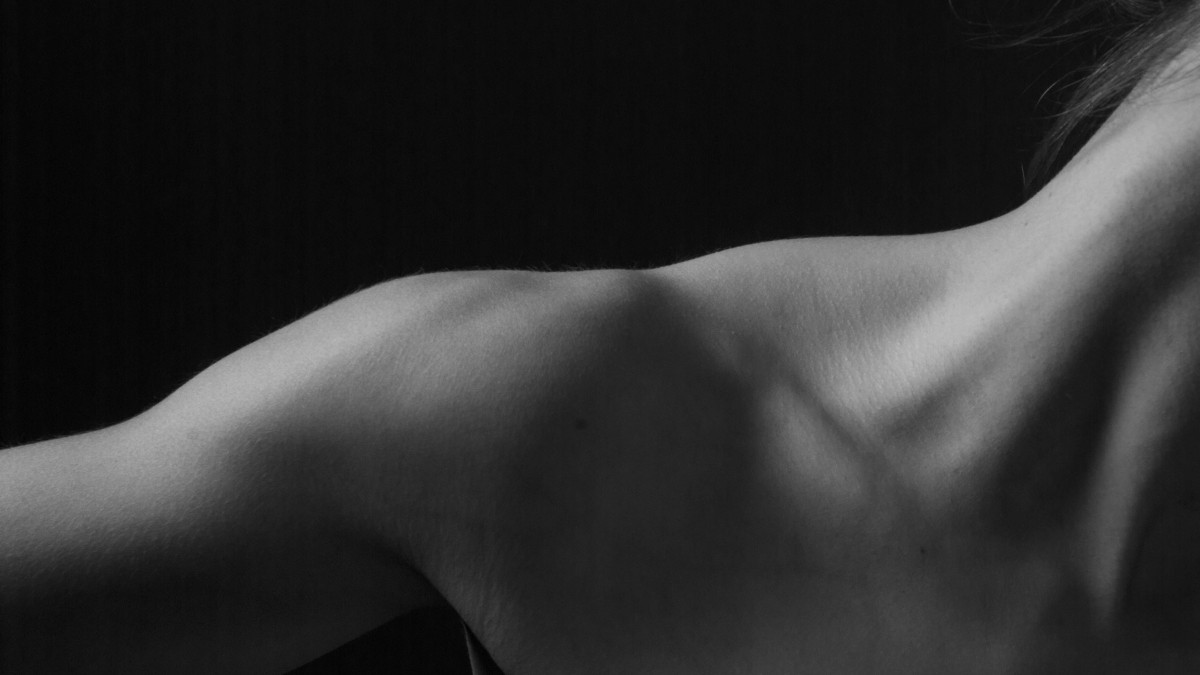
Mary had been living with frozen shoulder for six months when she came to AMIT Clinics in Draper, Utah. She had already been to her primary care physician, had already tried cortisone injections, and had already been told that shoulder surgery was the next step. She was 48 years old. The idea of shoulder surgery — the recovery time, the rehabilitation, the uncertainty about outcome — was not something she was prepared to accept without exploring every alternative first.
Frozen shoulder syndrome — also called adhesive capsulitis — is a condition characterized by progressive stiffness, pain, and loss of range of motion in the shoulder joint, typically developing over months and often lasting years without appropriate treatment. For patients like Mary who are searching for a chiropractor near them in Draper or Kaysville, Utah, and who have been told surgery is their only remaining option, the AMIT approach offers a clinically specific alternative: identify the inhibited muscles driving the frozen shoulder pattern, restore their activation, and use the OTZ (Oclusal Titanium Zone) procedure to address the cranial and cervical components that standard shoulder treatment misses.
What Actually Causes Frozen Shoulder — and Why Standard Treatment Falls Short
Frozen shoulder — the progressive capsular contracture and muscular inhibition pattern that produces the characteristic stages of freezing, frozen, and thawing — is almost always more complex than it appears on imaging. The glenohumeral joint capsule does thicken and contract in adhesive capsulitis. But the restriction that patients feel is maintained and compounded by inhibition in the rotator cuff muscles, the periscapular stabilizers, and the deep cervical muscles that coordinate shoulder girdle movement. Treating the capsule without restoring the inhibited muscles that protect and move the joint produces the gradual, unpredictable resolution that frozen shoulder patients are told to expect — two to four years for spontaneous recovery, or surgery.
The standard treatment pathway — physical therapy, cortisone injections, and manipulation under anesthesia — addresses the mechanical restriction and the inflammatory component. It does not specifically identify or restore the muscle inhibition pattern that is maintaining the restriction, limiting overhead range, and producing the sharp pain that patients experience when the joint is challenged. This is the gap that AMIT-based frozen shoulder treatment fills.
Why Cortisone Alone Doesn't Resolve Frozen Shoulder
Cortisone injections reduce inflammation in the shoulder joint capsule — providing real but temporary relief. For patients in the early freezing stage, cortisone can slow the progression. But once the frozen stage is established (the restriction is now driven by capsular contracture and muscle inhibition, not primarily inflammation), cortisone has a progressively diminishing role. Mary had already received cortisone injections before coming to AMIT Clinics. They reduced her pain for a few weeks. They did not restore her range of motion or resolve the underlying inhibition pattern. That required a different approach.
Confronting Frozen Shoulder
Mary's case exemplifies the challenges of Frozen Shoulder Syndrome, a condition impacting the daily life of those who suffer from it. Mary's remarkable turnaround meant lifting her arm above her head pain-free after completing her treatment sessions:
The A.M.I.T. Method identified inhibited shoulder muscles
Treatment utilized the OTZ procedure
The A.M.I.T Method addressed Mary’s surface pain and underlying causes
Step 1 — Identifying Mary's Inhibited Shoulder Muscles
AMIT assessment revealed that Mary's restricted shoulder was not simply 'frozen' — it was operating with significant inhibition in the infraspinatus, teres minor, and subscapularis muscles that normally control external rotation and center the humeral head in the glenoid. These muscles had inhibited progressively as the shoulder became more painful, leaving the joint increasingly dependent on passive capsular structures for stability. The result was the classic frozen shoulder restriction pattern: preserved forward flexion in early stages, progressive loss of external rotation, and the deep aching that worsens at night.
Step 2 — The OTZ Procedure
The OTZ (Oclusal Titanium Zone) procedure is a specialized technique used within the AMIT framework to address the cranial and cervical components of shoulder restriction that standard shoulder treatment does not reach. Shoulder movement is coordinated through a complex neurological chain that includes the cervical spine and cranial nerves — and disruption in this chain is a consistent finding in frozen shoulder patients who have not responded to local shoulder treatment alone. The OTZ procedure restores proper neurological signaling through this chain, removing the central inhibitory component that keeps the shoulder muscles offline even after local treatment. For Mary, this was the breakthrough step — the procedure that produced the immediate improvement that six months of other treatment had not.
Step 3 — Addressing Both Surface Pain and Underlying Causes
The final stage of Mary's treatment addressed the compensation patterns that had developed over six months of restricted movement — the neck tension, the thoracic tightness, the altered posture that develops when a shoulder stops contributing normally to the movement chain. Restoring the shoulder's full function requires not just addressing the shoulder itself but unwinding the full kinetic chain that adapted around it. By the time Mary completed her treatment course, she could lift her arm above her head pain-free — the benchmark she had been unable to reach since the frozen shoulder began.
Mary didn’t just get her shoulder back, she got her life back!
What makes the A.M.I.T Method stand out?
What sets AMIT-based frozen shoulder treatment apart from standard chiropractic, physical therapy, and cortisone protocols:
Identifies the specific inhibited muscles — not just the restricted joint. Standard frozen shoulder treatment stretches and mobilizes the capsule. AMIT assessment maps which rotator cuff and periscapular muscles have inhibited and restores their neurological activation directly — which is what allows the joint to move with protection, not just with force.
Addresses the full neurological chain, not just the shoulder. The OTZ procedure targets the cranial and cervical components of shoulder restriction that local treatment alone doesn't reach — the reason many patients who've had extensive physical therapy still plateau.
Non-surgical and non-pharmaceutical. AMIT-based frozen shoulder treatment requires no surgery, no injections, and no medication dependency. For patients who have been told surgery is their next step, this is a clinically grounded alternative with documented patient outcomes.
Produces results faster than natural resolution. Untreated frozen shoulder takes 2–4 years to resolve spontaneously — and in many cases, never fully resolves. AMIT treatment produces meaningful improvement within weeks, with most patients achieving significant range of motion restoration within 6–12 sessions.
Treats both the surface pain and the underlying cause simultaneously. Mary's treatment addressed both the pain she felt and the inhibition pattern creating it — which is why her outcome was resolution, not just management.
Empowers patients to stay active. The goal of AMIT-based care is not to manage frozen shoulder for years — it is to restore full function so patients like Mary can return to every activity the shoulder had taken away.
Frequently Asked Questions About Frozen Shoulder & AMIT Treatment
Can a chiropractor treat frozen shoulder?
Yes. AMIT-based chiropractic treatment is a highly effective approach to frozen shoulder — particularly for patients who have plateaued with physical therapy or have been told surgery is their next step. AMIT identifies and restores the inhibited rotator cuff and periscapular muscles that maintain the frozen shoulder restriction pattern, and uses the OTZ procedure to address the cervical and cranial components of the restriction. Most frozen shoulder patients at AMIT Clinics in Draper and Kaysville achieve significant range of motion improvement within 6–12 sessions.
How long does frozen shoulder take to heal with treatment?
Without specific treatment, frozen shoulder can last 2–4 years and in many cases never fully resolves. With AMIT-based treatment, most patients see meaningful range of motion improvement within the first 4–6 sessions, with full or near-full resolution typically achieved within 6–12 sessions depending on the stage of the condition and how long it has been present. Mary's six-month frozen shoulder responded within a single treatment course. The earlier in the freezing stage treatment begins, the faster and more complete the resolution.
What is the OTZ procedure for frozen shoulder?
The OTZ (Oclusal Titanium Zone) procedure is a specialized technique used within the AMIT framework to restore proper neurological signaling through the cranial and cervical chain that coordinates shoulder movement. Frozen shoulder frequently has a cervical and cranial inhibitory component — a disruption in the neurological pathway that prevents the shoulder muscles from fully reactivating even after local treatment. The OTZ procedure addresses this central component, which is why patients who have received extensive physical therapy without full resolution often experience significant improvement after OTZ is incorporated into their treatment.
What are the alternatives to shoulder surgery for frozen shoulder?
The most effective non-surgical alternatives to shoulder surgery for frozen shoulder are treatments that address the full neuromuscular mechanism — not just the joint capsule. AMIT-based treatment at AMIT Clinics in Draper and Kaysville identifies the inhibited muscles driving the frozen shoulder restriction, restores their activation using manual muscle testing and AMIT technique, and addresses the cervical and cranial components with the OTZ procedure. This approach produces resolution for the majority of patients who have been told surgery is their only remaining option, without the recovery time, surgical risk, or rehabilitation burden of shoulder surgery.
What are the stages of frozen shoulder and does AMIT treat all of them?
Frozen shoulder progresses through three stages: freezing (progressive pain and stiffness over 2–9 months), frozen (pain may reduce but restriction remains — 4–12 months), and thawing (gradual return of motion — 5–24 months). AMIT-based treatment is effective in all three stages. In the freezing stage, treatment can slow or halt progression. In the frozen stage — where most patients present — AMIT addresses the muscle inhibition and OTZ technique addresses the neurological component to restore range. In the thawing stage, treatment accelerates the resolution that the body is attempting naturally. Mary presented in the frozen stage and achieved resolution within her treatment course.
Where can I find frozen shoulder treatment near me in Draper or Kaysville, Utah?
AMIT Clinics has locations in both Draper and Kaysville, Utah, providing AMIT-based frozen shoulder treatment and OTZ procedure for patients throughout Salt Lake County, Davis County, and the Wasatch Front. We offer a non-surgical alternative for patients who have been told shoulder surgery is their next step. Same-week appointments are available. Contact AMIT Clinics to schedule your shoulder assessment.