
Knee pain that builds gradually during a run and eases with rest is usually manageable and often related to overuse patterns like runner's knee or IT band irritation, while sharp, sudden pain, swelling, or a feeling of the knee giving way means stop running immediately and get evaluated, since those signs point toward a more significant structural issue.
The Question Every Runner Eventually Asks
At some point, almost every runner feels a twinge in the knee mid-run and has to make a quick decision: keep going, or stop. Get that call wrong often enough, in either direction, and it causes problems. Push through the wrong kind of pain and a minor issue becomes a training-ending one. Stop for every minor ache and you never build the tolerance that makes running sustainable.
The good news is that knee pain during running tends to fall into recognizable categories, and each one comes with a reasonably clear answer about whether to continue.
Pain That's Usually Safe to Run Through (With Modifications)
Runner's knee (patellofemoral pain). A dull, aching pain around or behind the kneecap, often worse going downhill or downstairs. This is typically caused by the kneecap tracking slightly off-center as the surrounding muscles fatigue. It's rarely a sign of tissue damage in progress, and light-to-moderate activity often doesn't make it worse, though ignoring it long-term will keep it from resolving.
IT band tightness. A tight, sometimes burning sensation on the outside of the knee, usually appearing at a predictable point in a run and easing with a change in pace or stride. IT band syndrome relief covers this pattern in more depth, but the short version is that it's a friction-and-overuse issue, not a structural one, and mild cases are generally safe to continue training through while addressing the cause.
General post-run soreness. Mild, diffuse soreness that shows up after a run and fades within a day is normal training stress, not injury. The distinction is that it doesn't worsen during the run itself and doesn't linger for multiple days.
Pain That Means Stop Immediately
Sharp, localized pain with a specific point you can press on. This kind of focal pain, especially if it appeared suddenly during a specific stride or landing, suggests a more acute issue, potentially involving a tendon, meniscus, or bone stress reaction, and continuing to run on it risks turning a minor injury into a significant one.
Swelling that develops within hours. Rapid swelling is the body's inflammatory response to real tissue irritation or injury, and it's a strong signal to stop and rest the joint rather than push through.
A sense of instability or giving way. If the knee feels like it might buckle, catch, or lock, that points toward a possible ligament or meniscus issue, and running on an unstable joint significantly raises the risk of a more serious injury.
Pain that gets progressively worse during the run rather than warming up. Most overuse patterns ease slightly once the tissue warms up, then return afterward. Pain that steadily intensifies as the run continues is a different signal and generally means the activity itself is actively aggravating the injury in real time.
Why "Just Rest It" Isn't the Full Answer Either
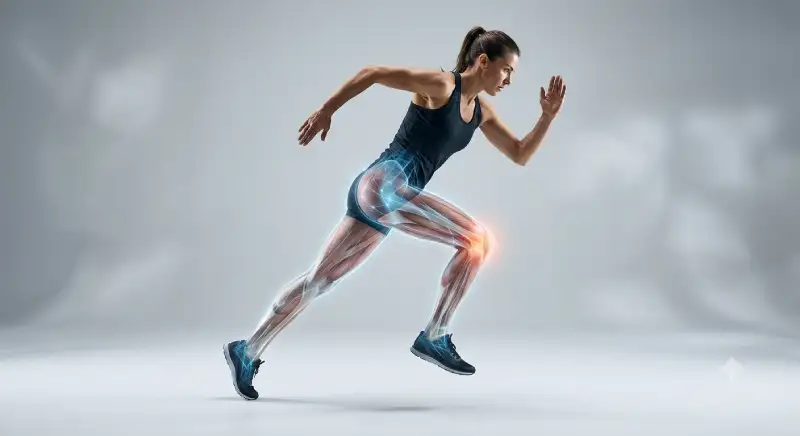
Stopping a painful activity is the right first step, but it's rarely the complete solution for knee pain that recurs run after run. In our clinical experience treating runners across Draper, Kaysville, and the broader Utah County running community, the knee pain that keeps coming back almost always traces to something happening above or below the knee, not the knee joint itself.
Weak hip stabilizers let the thigh rotate inward with every stride, increasing stress on the kneecap. Tight or underactive calf and shin muscles change how force absorbs through the lower leg, contributing to both shin splint recovery and knee overload. Fixing the knee pain long-term usually means addressing one of these upstream or downstream contributors, not just resting the knee and hoping the pattern doesn't return once training resumes.
A Practical Framework for Utah Runners
1. Note where exactly it hurts and when. Around the kneecap, outside of the knee, or a specific pinpoint spot all suggest different causes.
2. Track whether it warms up or worsens during the run. Warming up suggests an overuse pattern that's likely safe to modify around. Worsening suggests something more acute.
3. Check for swelling within a few hours. No swelling and manageable soreness generally means continue with modifications. Swelling means stop and get evaluated.
4. Look upstream and downstream. Jumper's Knee treatment and hip weakness are common contributors worth addressing directly, not just the knee symptom itself.
5. If in doubt, don't guess. A brief evaluation is faster and cheaper than months of recurring pain from training through the wrong kind of injury.
Utah's trail and road running community logs a lot of miles across varied terrain, from flat river trails to steep canyon routes, and that terrain variety is part of why knee overuse patterns are so common here. Managing training load thoughtfully matters as much as any single treatment.
Terrain and Training Load: The Utah-Specific Factor
Runners training along the Wasatch Front deal with a wider range of terrain in a single season than runners in flatter regions typically encounter. A training block might include flat pavement in Draper, rolling foothill trails near Kaysville, and steep canyon climbs on the weekend. Each surface and grade loads the knee differently, and switching between them abruptly, without a gradual adjustment period, is one of the more common triggers for knee pain we see in local runners.
Downhill running in particular places significant eccentric load on the quadriceps and kneecap, which is why runner's knee symptoms often spike after a new trail with a long descent, even when weekly mileage hasn't changed much. Runners who ramp up trail volume quickly after a season of mostly flat road running are especially prone to this.
The seasonal shift matters too. Utah runners often increase both mileage and terrain difficulty at the same time each spring and fall, as weather allows for longer trail outings. Increasing two variables at once, distance and terrain difficulty, makes it harder for the body to adapt gradually, and knee pain is frequently the first sign that training load outpaced tissue tolerance.
A simple adjustment that helps many runners: when adding a new terrain type or a notably hillier route, hold weekly mileage steady for a week or two rather than increasing both at once. This gives the knee, hip, and ankle stabilizers time to adapt to the new demand without added volume on top of it.
Frequently Asked Questions
Is it safe to keep running with mild knee pain?
Mild, dull pain that warms up during the run and doesn't cause swelling is generally safe to run through with some training modifications, though it should still be addressed rather than ignored long-term.
What does runner's knee actually feel like?
Runner's knee typically feels like a dull ache around or behind the kneecap, often worse on downhill sections, stairs, or after prolonged sitting with the knee bent.
When should a runner stop and see a professional about knee pain?
Stop and get evaluated if the pain is sharp and localized, if swelling develops within hours, if the knee feels unstable, or if the pain worsens as the run continues rather than warming up.
Can hip weakness really cause knee pain in runners?
Yes. Weak hip stabilizers allow the thigh to rotate and drop inward with each stride, which increases stress on the kneecap and the IT band, making hip strength a common and often overlooked factor in recurring knee pain.
How long does IT band syndrome usually take to resolve?
With appropriate training modification and correction of the underlying strength or gait issue, most cases improve meaningfully within four to six weeks, though the timeline depends on how long the pattern was present before treatment began.
Should I switch running shoes if my knee starts hurting?
Footwear can be a contributing factor, but it's rarely the sole cause of persistent knee pain, and switching shoes without addressing strength or movement pattern issues often doesn't resolve the problem on its own.