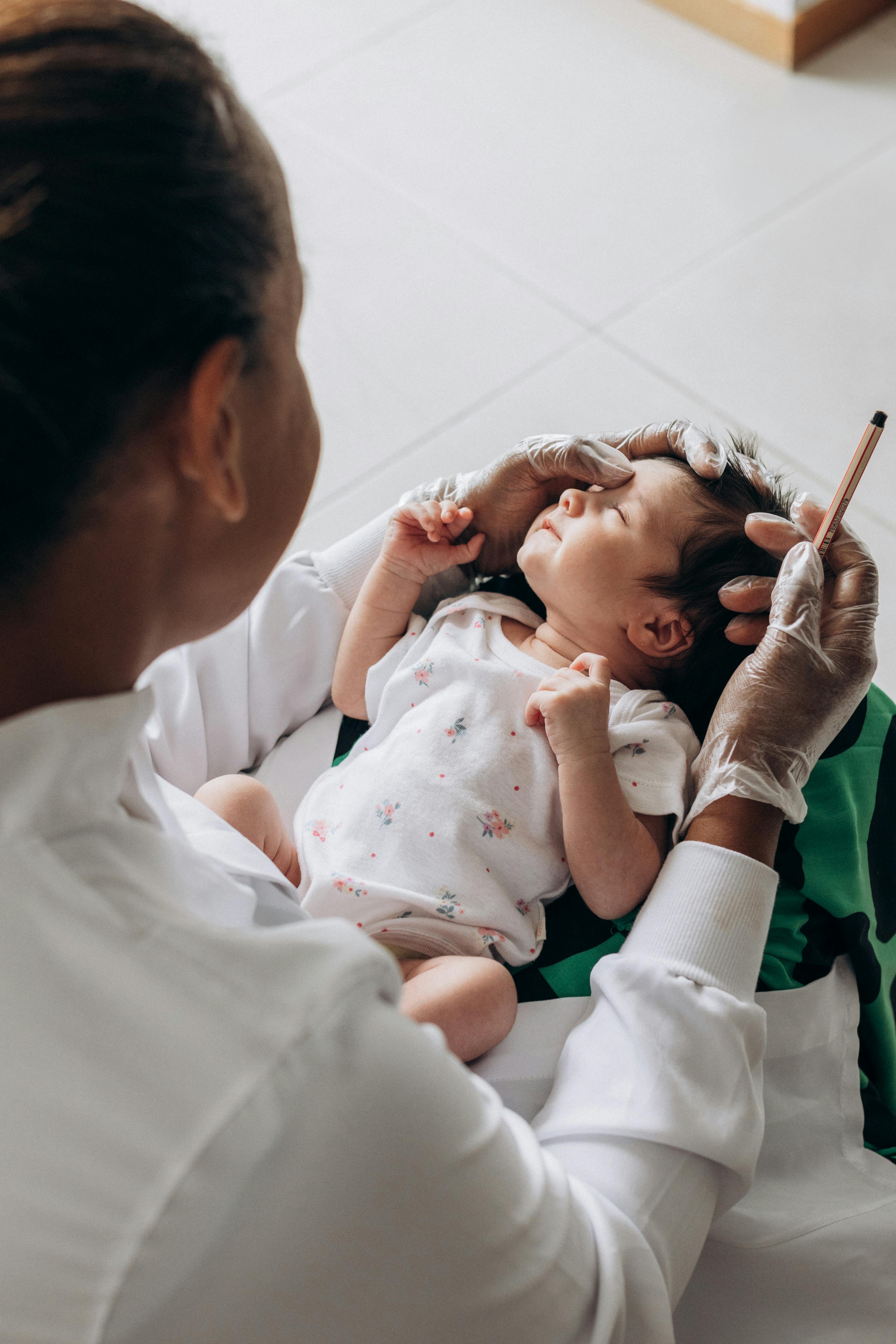
Will was born with a neurodevelopmental disorder that limited his speech. A cranial procedure most evaluations never test for changed that.
Will was born with a neurodevelopmental disorder that affected his ability to speak and coordinate movement. By the time his family came to AMIT Clinics in Draper and Kaysville, Utah, he had been silent for seven years. They had tried everything available to them. Progress had remained elusive. They were looking for a chiropractor near them who treated children, specifically one whose assessment looked at the cranial structures that standard pediatric evaluations had not addressed.
What AMIT assessment found changed Will's life in a single treatment. A fixated cranial suture — a restriction in the mobility of the bones of his skull — had been obstructing the flow of cerebrospinal fluid and restricting the neurological function that coordinates speech and movement. The Nasal-Specific cranial procedure released that fixation. And after seven years of silence, Will spoke his first full sentence.
If you are a parent in Draper, Kaysville, or throughout Salt Lake County whose child has a speech delay, coordination challenges, or a neurodevelopmental diagnosis — and you feel like you've exhausted the available options — Will's story is for your family.
Why Cranial Suture Fixation Can Affect Speech, Coordination, and Brain Function
The bones of the skull are not rigidly fused — they are connected by cranial sutures, fibrous joints that allow a very small degree of movement with each breath and with each pulse of cerebrospinal fluid (CSF). This movement — imperceptible to the naked eye but significant to the nervous system — facilitates the normal circulation of CSF through the cranial and spinal spaces, maintains appropriate intracranial pressure, and allows the dural membrane surrounding the brain and spinal cord to function without restriction.
Cranial suture fixation — the restriction of this normal micromotion, whether from birth, trauma, or developmental factors — impairs CSF circulation. When CSF cannot circulate normally, the brain's chemical and pressure environment changes. Neurological function in the regions downstream of the fixation can be compromised. For Will, whose suture fixation was present from birth, this restriction had been limiting the neurological environment available to the brain structures responsible for speech production and motor coordination since the earliest stages of his development.
Why Standard Evaluations Don't Always Catch This
Standard pediatric neurodevelopmental evaluations — speech pathology assessments, occupational therapy evaluations, neurological workups — focus on the functional presentation: what the child can and cannot do, and how to build the skills that are limited. They do not routinely assess cranial suture mobility or CSF circulation dynamics. This is not a failure of those evaluations — it is a difference in clinical framework. AMIT assessment adds a structural lens that standard evaluations don't include, which is why it identifies root causes that other approaches miss.
Breaking the Chains of Silence
Will's challenges extended beyond speech, it affected his coordination and ability to form sentences. Despite various attempts, progress remained elusive. The A.M.I.T. Method, however, identified and addressed the root cause:
Fixated cranial suture
Obstructed flow of cerebral spinal fluid
Restricted brain function
The A.M.I.T. Method's Nasal-Specific Cranial Adjustment Was Will's Breakthrough
With a simple balloon procedure, Will spoke his first full sentence after seven years of silence. A single A.M.I.T. treatment significantly altered Will's life and opened the door of potential for transformative change in children facing similar challenges.
Why the Same Procedure Helps Both Trauma and Neurodevelopmental Presentations
The Nasal-Specific procedure — regardless of whether the cranial suture fixation originated from trauma, as in Judy's soccer concussion case, or from congenital developmental factors, as in Will's case — works through the same anatomical pathway. By inflating a small balloon in the nasal passages, gentle pressure is applied to the sphenoid bone, which articulates with virtually every other bone in the skull. This pressure releases the suture fixations throughout the cranial network, restoring the micromotion that facilitates normal CSF circulation.
For children with neurodevelopmental presentations, the release of long-standing cranial suture fixations can produce neurological improvements that are sometimes dramatic and sometimes gradual — depending on how long the fixation has been present and which neurological systems it has been affecting. Will's immediate speech breakthrough after seven years of silence represents the most striking end of this spectrum. Other children experience more gradual improvements in speech clarity, coordination, attention, and sensory processing over subsequent treatment sessions.
For parents considering this approach for their child at AMIT Clinics in Draper or Kaysville, the assessment itself provides the most important information: whether cranial suture fixation is present, which sutures are involved, and whether the Nasal-Specific procedure is indicated. The assessment is non-invasive, gentle, and appropriate for children of all ages.
How can the A.M.I.T Method impact your family's life?
Speech Breakthroughs: When cranial suture fixation has been restricting the neurological environment available to the brain's speech production centers, releasing that fixation can remove a structural barrier to speech that no amount of speech therapy can address directly. Will's case demonstrates the upper limit of what this release can produce — but meaningful speech improvements have been documented across a range of children with fixation-related communication challenges.
Neurodevelopmental Support: Cranial suture assessment and Nasal-Specific treatment offers a structural evaluation that complements — rather than replaces — standard speech, occupational, and behavioral therapies. For children who have made limited progress through standard channels, adding a structural cranial assessment determines whether a mechanical component is limiting what those therapies can achieve.
Coordination and Movement Improvements: CSF flow restriction doesn't only affect speech — it affects the full neurological environment of the brain, including the motor coordination systems. Children with cranial suture fixation often show improvements in gross motor coordination, fine motor control, and balance alongside speech gains.
Non-Surgical, Non-Pharmaceutical Solutions: The Nasal-Specific procedure requires no surgery, no anesthesia, and no medication. It is appropriate for children and produces no recovery downtime. For families seeking a non-invasive intervention alongside or instead of pharmaceutical management of neurodevelopmental symptoms, this approach is worth assessing.
Pain Relief and Physical Comfort: Cranial suture fixation in children often produces chronic low-grade discomfort — head pressure, tension, and sensory sensitivity — that children cannot always articulate. Releasing the fixation frequently produces improvements in comfort, sleep, and sensory tolerance that families describe as a secondary transformation alongside the communication gains.
Results That Open New Possibilities: Will's story is not offered as a promise of identical outcomes for every child. It is offered as evidence that the structural dimension of neurodevelopmental challenges is real, assessable, and in some cases treatable — and that AMIT Clinics in Draper and Kaysville is equipped to assess it.
Frequently Asked Questions From Parents About Cranial Treatment, Speech & AMIT
Can cranial adjustment help a child with speech delay?
For children whose speech delay has a cranial suture fixation component — a restriction in the normal micromotion of the skull bones that is obstructing CSF circulation and neurological function — AMIT cranial assessment and Nasal-Specific treatment can remove a structural barrier that speech therapy alone cannot address. Will spoke his first full sentence after seven years of silence following a single Nasal-Specific cranial procedure at AMIT Clinics. Not every child will experience this dramatic a result, but for families whose child has not progressed through standard speech and developmental therapy, a cranial structural assessment is a clinically appropriate next step.
What is the Nasal-Specific procedure for children?
The Nasal-Specific procedure for children involves the same technique used for adults: a small, finger-cot balloon is gently inserted into the nasal passages and briefly inflated to apply gentle pressure to the sphenoid bone — the central bone of the cranial base — releasing fixated cranial sutures throughout the skull. The procedure is brief, gentle, and does not require anesthesia or sedation. It is appropriate for children of all ages when cranial suture fixation is identified during assessment. The procedure produces no recovery downtime. AMIT Clinics in Draper and Kaysville assesses children for cranial suture fixation as part of a comprehensive AMIT evaluation.
How do I know if my child has cranial suture fixation?
Cranial suture fixation is identified through specific palpation assessment — a trained AMIT practitioner tests the mobility of the cranial sutures by gentle palpation of the skull. Fixated sutures feel restricted and often produce tenderness on palpation. This assessment is not performed in standard pediatric neurodevelopmental evaluations, which focus on functional presentation rather than cranial structural mobility. If your child has speech delay, coordination challenges, chronic headaches, sensory sensitivity, or unexplained developmental limitations — particularly if standard evaluations and therapies have produced limited progress — an AMIT cranial assessment at our Draper or Kaysville clinic is a low-risk, non-invasive first step.
Can AMIT help children with neurodevelopmental diagnoses?
AMIT cranial assessment and Nasal-Specific treatment addresses the structural component of neurodevelopmental presentations — specifically, cranial suture fixation and its effects on CSF circulation and brain function. It does not treat neurodevelopmental diagnoses directly, but for children whose diagnosis is accompanied by cranial suture fixation (a structural finding that AMIT can identify and address), removing the structural restriction can improve the neurological environment available to the child's developing brain. Families of children with diagnoses including autism spectrum disorder, sensory processing disorder, expressive language disorder, and other neurodevelopmental conditions have sought AMIT cranial assessment as a complementary evaluation alongside standard care.
Is cranial treatment safe for children?
The AMIT cranial assessment and Nasal-Specific procedure are gentle, non-surgical, and appropriate for children. The procedure involves brief, gentle pressure — no manipulation, no cracking, no anesthesia. AMIT practitioners at our Draper and Kaysville clinics are trained specifically in the technique and adapt the procedure appropriately for children based on age and size. The assessment itself is entirely non-invasive. For families considering cranial assessment for their child, the initial evaluation carries no risk and provides clear information about whether cranial suture fixation is present and whether treatment is indicated.
Where can I find AMIT cranial treatment for my child near me in Draper or Kaysville?
AMIT Clinics has locations in both Draper and Kaysville, Utah, providing AMIT cranial assessment and Nasal-Specific treatment for children and adults throughout Salt Lake County, Davis County, and the Wasatch Front. We specialize in presentations — both pediatric neurodevelopmental and adult post-concussion — where cranial suture fixation may be contributing to the patient's symptoms. Same-week appointments are available. Contact AMIT Clinics to schedule your child's cranial assessment.
Could the A.M.I.T Method be the key to unlocking your child's potential?
Explore the life-changing impact of the A.M.I.T. Method and discover new possibilities for your child's life.