
Why Recovery Deserves the Spotlight This Month
Most people treat recovery as what happens between the things that matter. It is the thing that matters. Tissue repair, protein synthesis, and nervous system adaptation all happen during recovery, not during the workout or the treatment session. If recovery is the bottleneck, more training and more appointments will not move the timeline.
The habits that speed recovery from an existing injury are also the ones that prevent the next one, so this works as treatment and as prevention.
Treat Sleep Like Part of the Treatment Plan

Sleep is the highest-leverage recovery lever, and it is the one most people negotiate away first. Growth hormone release, tissue repair, and consolidation of new movement patterns all concentrate in sleep. The CDC recommends 7 or more hours per night for adults aged 18 to 60, and 7 to 9 hours for adults 61 to 64.
What to change this month:
Set a fixed wake time and work backward eight hours to a target bedtime. Consistency beats total hours.
Keep the room dark and cool, and get bright light within thirty minutes of waking.
Move caffeine to before noon if you are healing from anything.
If pain is what wakes you, that is a clinical problem, not a sleep hygiene problem. Bring it to your provider.
Patients who fix sleep first progress faster through the rest of the plan. It is the least glamorous item here and the one with the largest effect.
Feed the Repair Process
Healing tissue is a construction project, and protein is the material. Spreading intake across the day rather than loading it at dinner keeps amino acids available while repair is happening. Aim for a protein source at every meal, plus enough fluid that urine stays pale.
Practical muscle recovery tips that matter more than any supplement:
Include protein at breakfast. Most people are protein-starved until dinner.
Eat enough total calories. Healing raises energy demand, and under-eating stalls repair.
Build meals around whole foods with color: fatty fish, leafy greens, berries, olive oil, nuts. The anti-inflammatory pattern is a pattern, not a pill.
Drink water through the day rather than in two large amounts. Connective tissue depends on hydration for its mechanical properties.
Reactivate the Muscles That Shut Down
Here is the part most recovery lists skip. When you injure something, the nervous system reduces recruitment of the muscles around it to protect the area. That is useful for a few days, but the inhibition often outlasts the injury. Pain resolves, imaging looks fine, and the muscle still is not firing, so nearby tissues compensate and the same area keeps getting re-injured.
This is why so many people describe an ankle that never felt right again, or a shoulder that keeps flaring after every heavy week. Muscle reactivation therapy tests which muscles are actually recruiting, then restores the signal to the ones that quit so load distributes properly. In our experience this is the most common missing piece in people who have tried rest, ice, and stretching without getting back to full function.
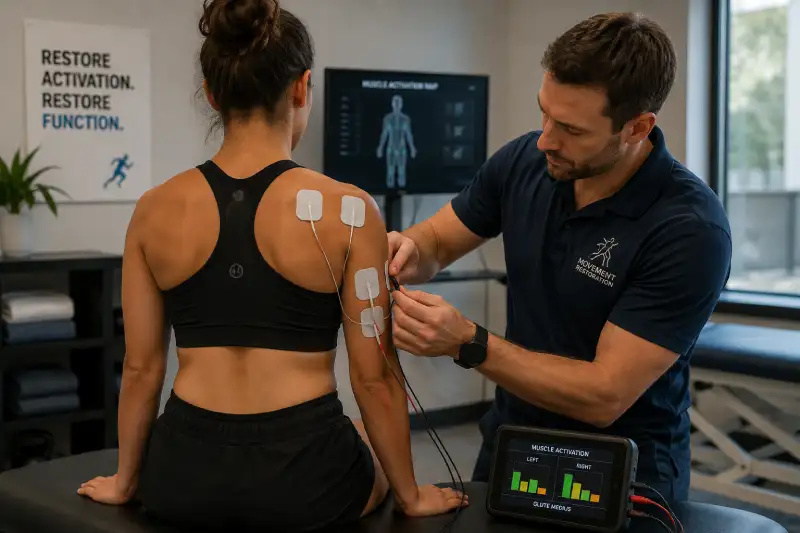
Once activation returns, progressive loading works. Skipping this step and going straight to strengthening usually just makes the compensating muscles stronger.
Support Cellular Repair With Targeted Therapy
Some therapies work on the tissue itself rather than on how you move. Alongside the basics, they can shorten the uncomfortable early phase.
PEMF therapy for recovery applies pulsed electromagnetic fields to the injured area to support cellular activity and reduce swelling, which is often what is limiting range of motion in the first two weeks.
Erchonia laser treatment uses low-level laser light to target inflamed and irritated tissue. It is non-thermal and non-invasive, which makes it a reasonable option for people who want to avoid injections while they rebuild.
The honest framing: these are accelerators, not substitutes. Nobody recovers on therapy alone while sleeping five hours and skipping their exercises. Paired with the other four levers, they get you to loading sooner, and that is what compresses the timeline.
Move Every Day, Even While You Are Healing
Complete rest is the right answer for a very short window and the wrong answer after that. Movement drives blood flow, moves lymph, and gives healing tissue the mechanical signal it needs to remodel in the right direction. Immobilized tissue heals disorganized and weak.
The CDC recommends 150 minutes of moderate aerobic activity per week plus muscle-strengthening work on at least two days, and it explicitly notes you can break the aerobic minutes into smaller chunks. While injured, work around the injury rather than stopping: cycle if running hurts, train the uninvolved side, walk if nothing else is available.
Minimum viable dose: Walk daily, even ten minutes at a time.
Non-negotiable: Two strength sessions weekly, scaled to what the injury tolerates.
Stop signal: Sharp pain, pain that lingers hours after, or swelling that increases. Mild discomfort that settles quickly is usually fine.
A 4-Week National Wellness Month Reset
One change per week, kept for the rest of the month. This is deliberately small, because recovery plans fail from overload, not from lack of ambition.
Week | One change | How you know it worked |
Week 1 | Fixed wake time, target 7 or more hours | Waking without an alarm most days |
Week 2 | Protein at every meal, water through the day | Steadier energy, less afternoon crash |
Week 3 | Get muscle activation assessed, start the corrective work | Movements feel easier before they feel stronger |
Week 4 | Two strength sessions plus daily walking, locked in the calendar | Both sessions completed two weeks running |
Injury Prevention for Active Utahns
Utah creates a specific pattern. People sit through a desk week, then load hard on Saturday in the Wasatch: elevation gain, moguls, long climbing days. That on-off swing is where most non-contact injuries come from, and it is a preparation problem, not a toughness problem.
Two habits fix most of it. Do something on weekdays so Saturday is not a shock, and build single-leg strength, since trails, moguls, and climbing load one leg at a time. Altitude also raises fluid needs above what most people drink.
Frequently Asked Questions
How can I speed up muscle recovery?
Prioritize sleep of 7 or more hours, get protein at every meal, stay hydrated, and keep moving with light activity rather than resting completely. Those four cover most of the available gain. Therapies such as PEMF or low-level laser can accelerate the early phase but do not replace the basics.
What helps injuries heal faster?
Adequate sleep, sufficient protein and calories, controlled movement instead of immobilization, and restoring muscle activation around the injured area. The last one is the most frequently missed, and it is usually why strength does not come back even after the pain does.
Does sleep really help injuries heal?
Yes. Tissue repair and the consolidation of new movement patterns both concentrate during sleep, and the CDC recommends 7 or more hours nightly for adults. If pain is interrupting your sleep, treat that as part of the injury rather than a separate issue.
When is National Wellness Month?
National Wellness Month is observed throughout August each year, including August 2026. It focuses on self-care, stress management, and healthy routines, which makes it a natural time to reset recovery habits.
Should I rest or move an injury?
Rest briefly, then move. Protect the area for the first day or two, then reintroduce controlled, pain-tolerable movement. Prolonged immobilization leaves tissue weaker and less organized. If sharp pain, lasting soreness, or increased swelling appears, scale back and get it assessed.