
Neck compression can send pain, numbness and weakness all the way to your fingers. Here is how to tell where the nerve is actually being pinched, and why arm symptoms so often get treated in the wrong place.
Neck compression can send pain, numbness and weakness all the way to your fingers. Here is how to tell where the nerve is actually being pinched, and why arm symptoms so often get treated in the wrong place. A pinched nerve in the neck can feel like a problem that has nothing to do with your neck at all. The neck itself may barely ache, yet your shoulder burns, two fingers go numb, and your grip suddenly gives out when you reach for a coffee cup. That mismatch is exactly why pinched nerve in neck symptoms are so often misread. The nerve is compressed at the spine, but the message it carries travels the entire length of the arm, so that is where you feel it.
What a pinched nerve in the neck actually is
Cervical radiculopathy: the medical term for a pinched nerve in the neck, where a nerve root is compressed or irritated as it exits the cervical spine. Each of those nerve roots is the starting point of a nerve that runs down into the shoulder, arm, and hand.
When something presses on that root, whether it is a bulging disc, a bone spur, or tight surrounding muscle, the nerve does not just hurt where it is pinched. It sends altered signals along its whole path, which is why a problem the size of a fingernail in your neck can light up your entire arm.
Why a neck problem shows up in your whole arm
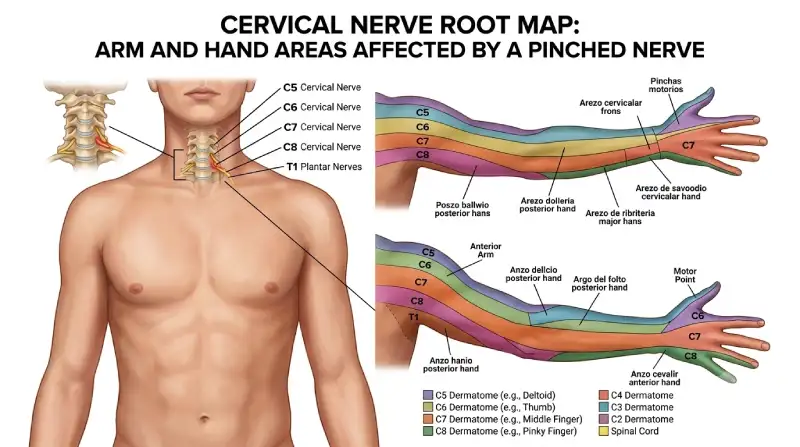
Every nerve root in the neck has a territory it is responsible for, a specific band of skin and a specific set of muscles. This is why symptoms follow predictable patterns rather than spreading randomly. A nerve pinched higher in the neck tends to affect the shoulder and outer arm, while one pinched lower tends to reach the forearm, hand, and fingers.
That map is useful. When someone tells us their thumb and index finger tingle but their pinky is fine, it points to a particular nerve root before we have run a single test. The arm is essentially reporting back on exactly where the neck is being squeezed, and reading that pattern correctly is half of getting the treatment right.
The symptoms most people notice first
Pinched nerve in neck symptoms rarely arrive all at once. They tend to build, and they show up along the arm rather than staying in the neck. The most common signs include:
Sharp or burning pain that shoots from the neck into the shoulder or down the arm
Numbness or a pins-and-needles feeling in specific fingers
Weakness when gripping, lifting, or holding the arm overhead
A dull ache in the shoulder blade that will not resolve with stretching
Symptoms that worsen when you tilt or turn your head a certain way
What causes the nerve to get pinched
Several things can compress a cervical nerve root, and they often overlap. A cervical disc herniation is one of the most common: the soft center of a disc pushes out and presses directly on the nerve root beside it. Age-related bone spurs and narrowing of the space the nerve passes through can do the same thing more gradually.
Muscle tension is the piece that gets overlooked. Chronically tight or poorly coordinated neck and shoulder muscles change how the joints sit and load, which can crowd an already irritated nerve. Treating the disc or the bone spur without addressing that muscular contribution is a big reason symptoms come back after they seem to settle.
When the pinch is lower down: thoracic outlet syndrome
Not every case of arm numbness starts at the neck. In thoracic outlet syndrome, the nerves or blood vessels get compressed lower, in the narrow space between the collarbone and the first rib. The symptoms can look almost identical to a pinched nerve in the neck, which is exactly why it is so often confused with one.
The clues are in the details. Thoracic outlet syndrome tends to flare with the arm raised overhead, may involve the whole hand rather than specific fingers, and can come with coolness or color changes if blood vessels are involved. Sorting out whether the compression is at the neck, at the thoracic outlet, or both is essential, because the treatment target is different for each.
Why arm symptoms so often get misdiagnosed
Because the pain is felt in the arm, people understandably chase the arm. They get treated for a shoulder strain, tennis elbow, or carpal tunnel, and wonder why nothing helps. The imaging of the sore area comes back clean, because the actual source is one or two joints upstream in the neck.
A proper assessment works backward from the symptom pattern to the source. It tests which movements reproduce the numbness, which muscles have gone weak, and which nerve territory is involved, rather than assuming the problem lives wherever it happens to hurt. That is the difference between chasing symptoms and treating the cause.
Everyday habits that keep the nerve irritated
Once a nerve root is sensitive, ordinary daily habits can keep it that way. Long stretches at a screen with the head jutting forward load the lower neck right where these nerves exit. Sleeping with the neck cranked to one side, cradling a phone against your shoulder, and carrying a heavy bag on the same side every day all add to the pressure.
None of these habits cause a pinched nerve on their own, but they can turn a minor irritation into a stubborn one. Part of any lasting fix is spotting the daily positions that keep reloading the nerve and adjusting them, so the tissue actually gets a chance to settle between visits rather than being aggravated again every afternoon.
Arm numbness treatment in Utah: how we approach it
Our starting point for arm numbness treatment in Utah is finding the true source of the compression, then addressing both the structural and the muscular side of it. If a cervical disc herniation is involved, the goal is to reduce the pressure on the nerve root and restore normal movement to the segment. Where muscle dysfunction is crowding the nerve, we work to get those muscles firing and coordinating properly again so the joint stops loading unevenly.
Many people are relieved to learn how much can improve without surgery. Cervical disc herniation relief frequently comes from a combination of restoring joint motion, calming the irritated nerve, and rebuilding the muscle support around it. Surgery has its place for severe or progressive cases, but it is not the automatic first step for most people with a pinched nerve in the neck.
When arm numbness needs urgent attention
Most pinched nerves are not emergencies, but some symptoms are and should not wait. Seek prompt medical care if you have rapidly worsening or severe weakness in the arm or hand, numbness in both hands, clumsiness or trouble with fine tasks like buttoning a shirt, changes in walking or balance, or any loss of bladder or bowel control. These can signal pressure on the spinal cord itself rather than a single nerve root, which is a different and more urgent problem.
Short of those red flags, arm symptoms that persist for more than a week or two, keep returning, or interfere with sleep and daily tasks are worth having evaluated. Nerve compression tends to respond better the earlier it is addressed, before compensation patterns set in.
Getting checked in Kaysville and Draper, UT
If your neck seems fine but your arm keeps telling you otherwise, that disconnect is worth taking seriously. At AMIT Clinics in Kaysville and Draper, we assess where the nerve is actually being compressed and how the surrounding muscles are contributing, then build a plan around resolving both. Reach out to schedule a consultation, and we will help you understand what your arm has been trying to tell you.