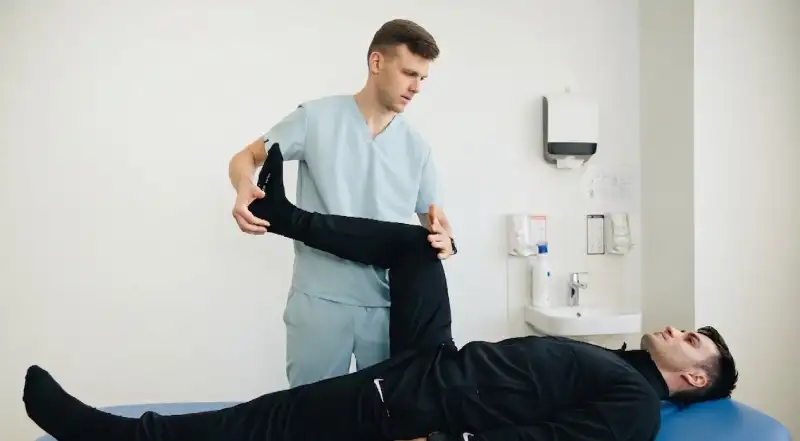
The A.M.I.T. Method, short for Advanced Muscle Integration Technique, is a diagnostic and treatment approach that identifies which specific muscles have shut down or stopped firing correctly, then reactivates them, rather than treating pain or joint restriction as the primary target the way traditional chiropractic adjustment does.
Why This Question Comes Up So Often
Nearly every new patient at our Draper and Kaysville clinics asks some version of the same question during their first visit: "Isn't this just chiropractic with a different name?" It's a fair question. Both approaches involve hands-on assessment, both can include joint adjustment, and both aim to reduce pain and restore movement.
The difference isn't in the tools. It's in the question each approach starts with.
The Core Difference: Symptom vs. Root Cause
Traditional chiropractic care generally starts with the joint. If a joint is restricted or misaligned, adjustment restores its normal motion, which frequently reduces pain and improves function. It's a well-researched, effective approach for a wide range of musculoskeletal complaints, and chiropractic adjustment remains part of how we treat many patients.
A.M.I.T. starts with a different question: which specific muscle stopped doing its job, and why did the surrounding structures start compensating for it? A joint that seems chronically misaligned is often being pulled out of position by a muscle that isn't stabilizing it correctly, not the other way around. Adjust the joint without addressing that muscle, and it tends to drift back toward the same restricted position within days.
What Muscle Inhibition Actually Means
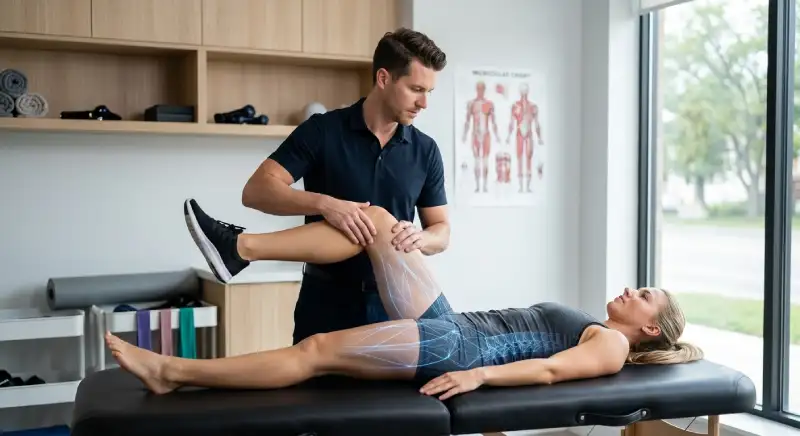
The concept underlying A.M.I.T. is muscle inhibition, a phenomenon where a muscle's connection to the nervous system gets disrupted, often after an injury, and the muscle effectively goes offline even though the tissue itself isn't damaged. The brain stops sending it a strong signal, so it stops contracting properly, even during exercises specifically meant to target it.
This is different from a muscle being weak from disuse. An inhibited muscle can look and test normal in some situations and fail completely in others, which is why generic strengthening programs often don't fix the underlying problem. You can't strengthen a muscle that isn't receiving a proper signal to contract; you have to restore that signal first.
How an A.M.I.T. Assessment Works
A session typically starts with manual muscle testing across a series of specific muscles, checking not just for strength but for the quality and consistency of the contraction. This identifies which muscles are inhibited, information that guides everything that follows.
From there, muscle reactivation therapy techniques are used to help restore the neuromuscular connection to the identified muscles, essentially re-establishing the signal between the brain and that muscle. Once a muscle reactivates, it often shows an immediate, measurable improvement in strength during retesting, sometimes within the same session.
Joint work, when needed, typically comes after reactivation rather than before, because a joint held in place primarily by a functioning muscle needs far less correction than one still being pulled by an inhibited one.
A Simple Example: The Knee That Wouldn't Cooperate
Here's a pattern we see often enough to consider it a clinical signature of muscle inhibition: someone sprains an ankle, it heals, and months later they develop knee pain on the same side with no clear new injury. Traditional evaluation of the knee alone often comes back unremarkable.
In our clinical experience, the explanation is frequently that certain hip and thigh muscles never fully reactivated after the ankle injury. The body compensated by shifting more load through the knee joint, and that compensation, sustained long enough, becomes its own source of pain. Addressing the knee directly provides only temporary relief in these cases; identifying and reactivating the muscles that went inhibited after the original ankle injury is what resolves it.
Where the Two Approaches Overlap
A.M.I.T. isn't a replacement for every tool in musculoskeletal care, and it isn't positioned as one. Erchonia laser therapy is frequently used alongside muscle reactivation work, particularly for patients whose pain responds well to reducing inflammation and improving local tissue healing while the underlying muscular pattern is being corrected.
The methodology also incorporates standard evaluation tools most patients would recognize from any physical medicine visit: range of motion testing, orthopedic screening, and postural assessment. What sets the overall approach apart is the priority given to muscle function testing before deciding what a joint restriction or pain pattern actually means.
Who A.M.I.T. Tends to Help Most
Patients with a history of injury that "mostly healed" but left behind a nagging weakness, instability, or recurring pain in a nearby area are often the best fit. So are athletes whose performance has quietly declined without an obvious new injury, and patients who've tried standard treatment for a joint or muscle issue without lasting improvement.
It's a methodology built around the idea that lasting relief requires understanding why a body part stopped functioning correctly, not just calming down the area that currently hurts.
Why the Name Matters More Than It Seems
Advanced Muscle Integration Technique is a deliberately specific name. "Advanced" refers to the layered assessment process, testing muscles individually rather than treating a region as one unit. "Muscle" signals where the investigation starts, not the joint, not the pain location, but the muscles responsible for controlling both. "Integration" describes the goal: getting a reactivated muscle working in coordination with the rest of the body's movement patterns, not just contracting in isolation on a treatment table.
That third word is where a lot of standard rehab falls short. It's possible to get an inhibited muscle to fire again during a specific test or exercise and still have it fail to contribute properly during a real-world movement like running, lifting, or reaching overhead. Integration work bridges that gap, which is why sessions often progress from isolated muscle testing toward more functional, activity-specific movement as treatment continues.
What a First Visit Typically Looks Like
New patients at either AMIT Clinics location can generally expect a session structured around three phases. First, a conversation about the injury history, current symptoms, and how the pain or limitation has changed over time, since compensation patterns often trace back further than the most recent flare-up. Second, a hands-on assessment that includes manual muscle testing across relevant muscle groups, orthopedic and range-of-motion screening, and postural observation. Third, an initial round of treatment targeting whatever inhibited muscles were identified, along with a clear explanation of what was found and why it's being addressed in that order.
Patients often leave a first visit with a noticeably different sense of what's actually driving their pain, even before a full treatment plan is complete, simply because the muscle testing reveals a pattern they hadn't considered.
Frequently Asked Questions
Is the A.M.I.T. Method the same as chiropractic care?
No. A.M.I.T. is a distinct methodology centered on identifying and reactivating inhibited muscles, while chiropractic care traditionally centers on restoring normal joint motion; the two approaches can be used together but ask different starting questions.
What is muscle inhibition?
Muscle inhibition is a disruption in the nervous system's connection to a specific muscle, often following an injury, that causes the muscle to stop contracting properly even though the tissue itself isn't damaged.
Does A.M.I.T. involve joint adjustments?
Yes, joint work is often part of the process, but it typically follows muscle reactivation rather than replacing it, since a joint supported by a properly functioning muscle usually needs less correction.
How long does it take to see results from A.M.I.T. treatment?
Many patients notice a measurable strength improvement in the targeted muscle within the same session, though full resolution of a longstanding compensation pattern typically takes several weeks of consistent treatment.
Can A.M.I.T. help an old injury that "never fully healed"?
Yes, this is one of the most common reasons patients seek out this approach, since standard treatment for the original injury site often doesn't address a muscle that went inhibited during the injury and stayed that way.
Is A.M.I.T. available at both the Draper and Kaysville AMIT Clinics locations?
Yes, both locations offer A.M.I.T. Method evaluation and treatment, along with complementary services like chiropractic adjustment and advanced pain therapies.