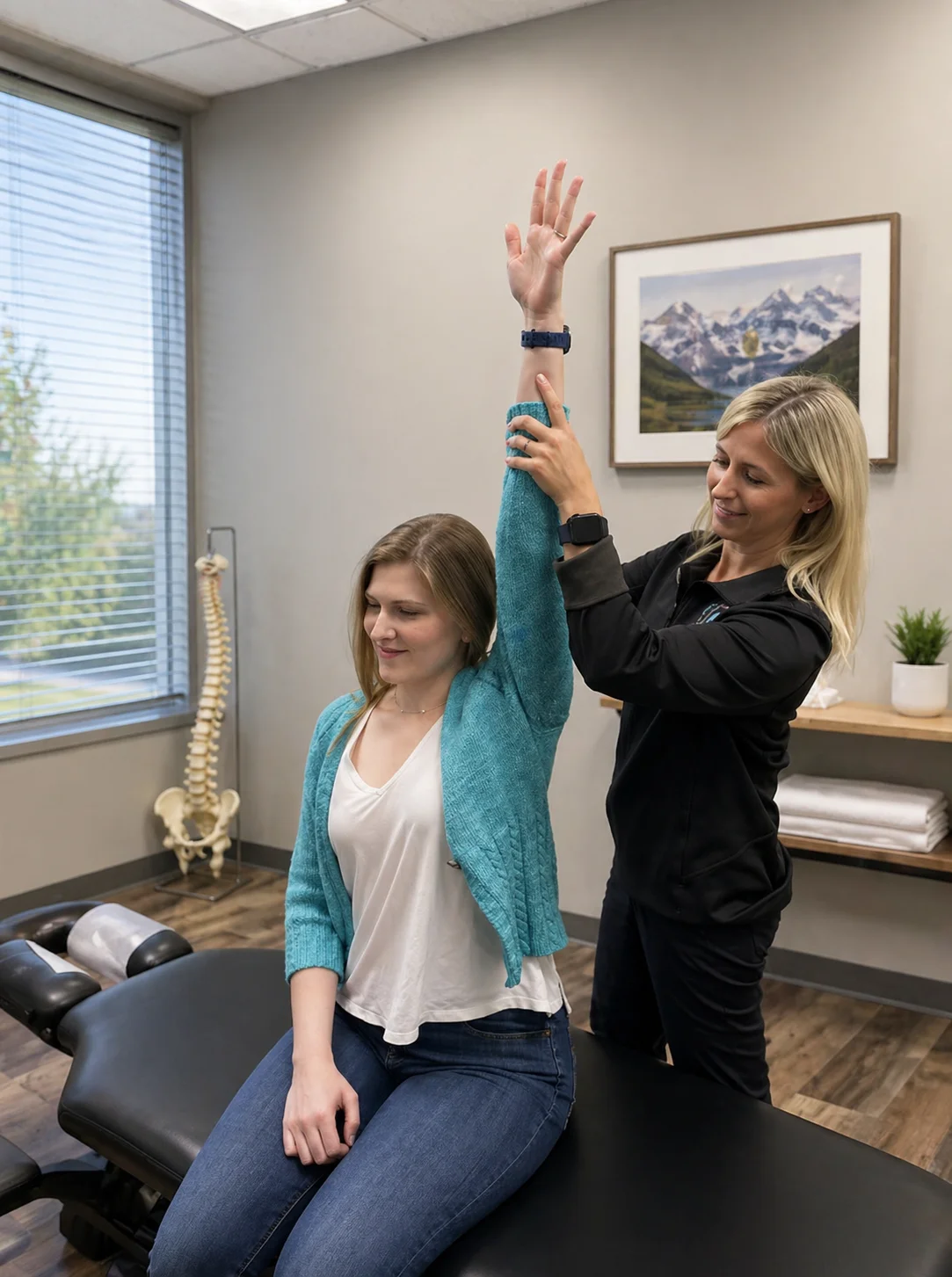
Bicipital tendonitis is inflammation of the biceps tendon at the shoulder — common in athletes and workers who do a lot of overhead work.
AMIT evaluates the full shoulder complex to find which muscles have stopped firing, which takes the excess load off the biceps tendon and lets it heal.

Shoulder Impingement
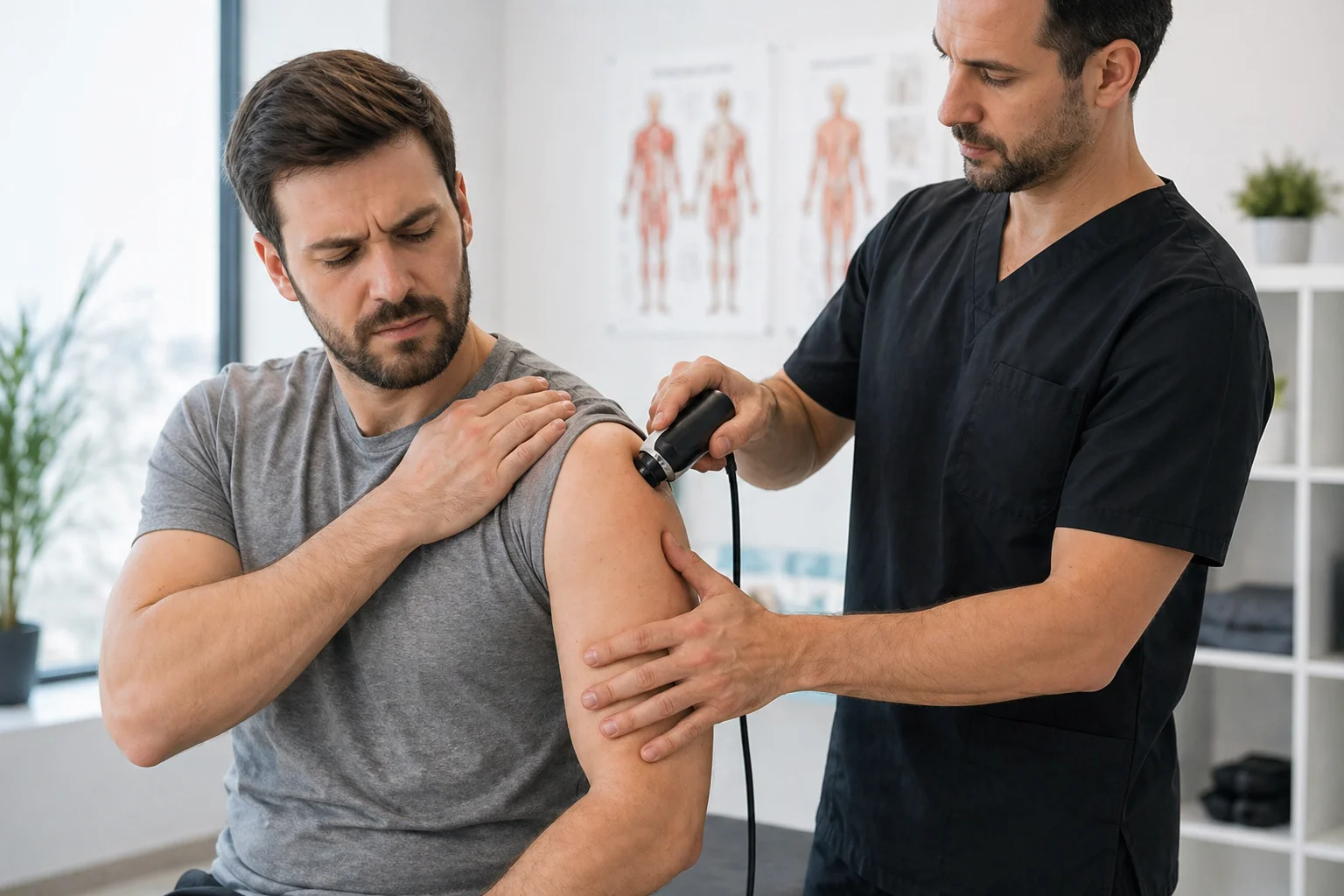
Shoulder impingement is compression of the rotator cuff tendons against the acromion during arm elevation — painful overhead, and progressive if left alone.
AMIT finds which shoulder stabilizers aren’t firing and restores them, which is often enough to resolve impingement without surgery.
Frozen shoulder — clinically, adhesive capsulitis — progressively locks down shoulder movement and causes significant pain. It often follows a period of immobility or a shoulder injury.
AMIT addresses the pattern of muscle inhibition contributing to capsule tightening, which tends to restore range of motion faster than stretching alone.
Rotator Cuff Syndrome
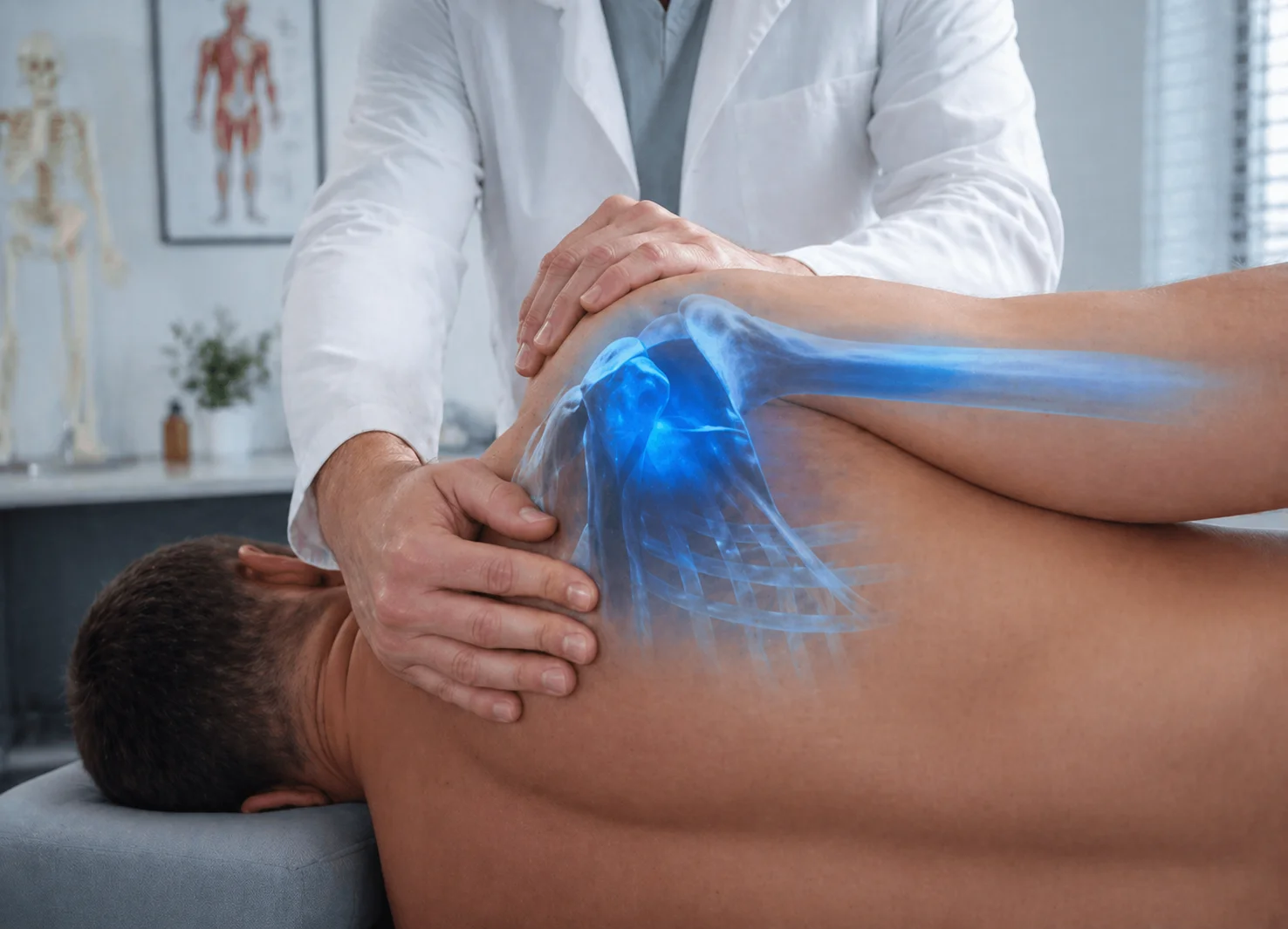
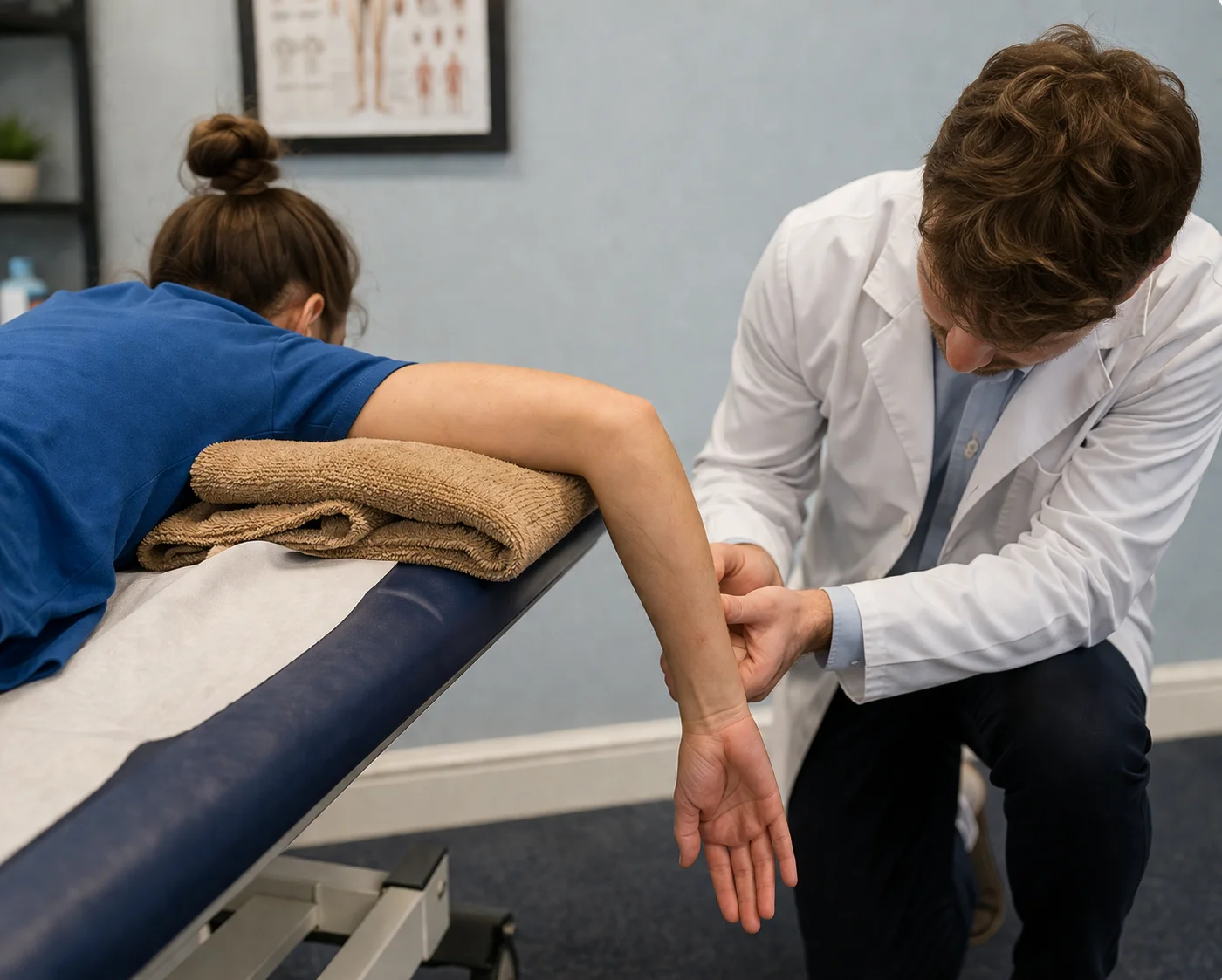
Rotator cuff syndrome covers everything from tendinopathy to partial and full-thickness tears.
Many patients avoid surgery by restoring proper muscle balance around the shoulder through AMIT therapy — correcting the neuromuscular dysfunction that was driving the degeneration.
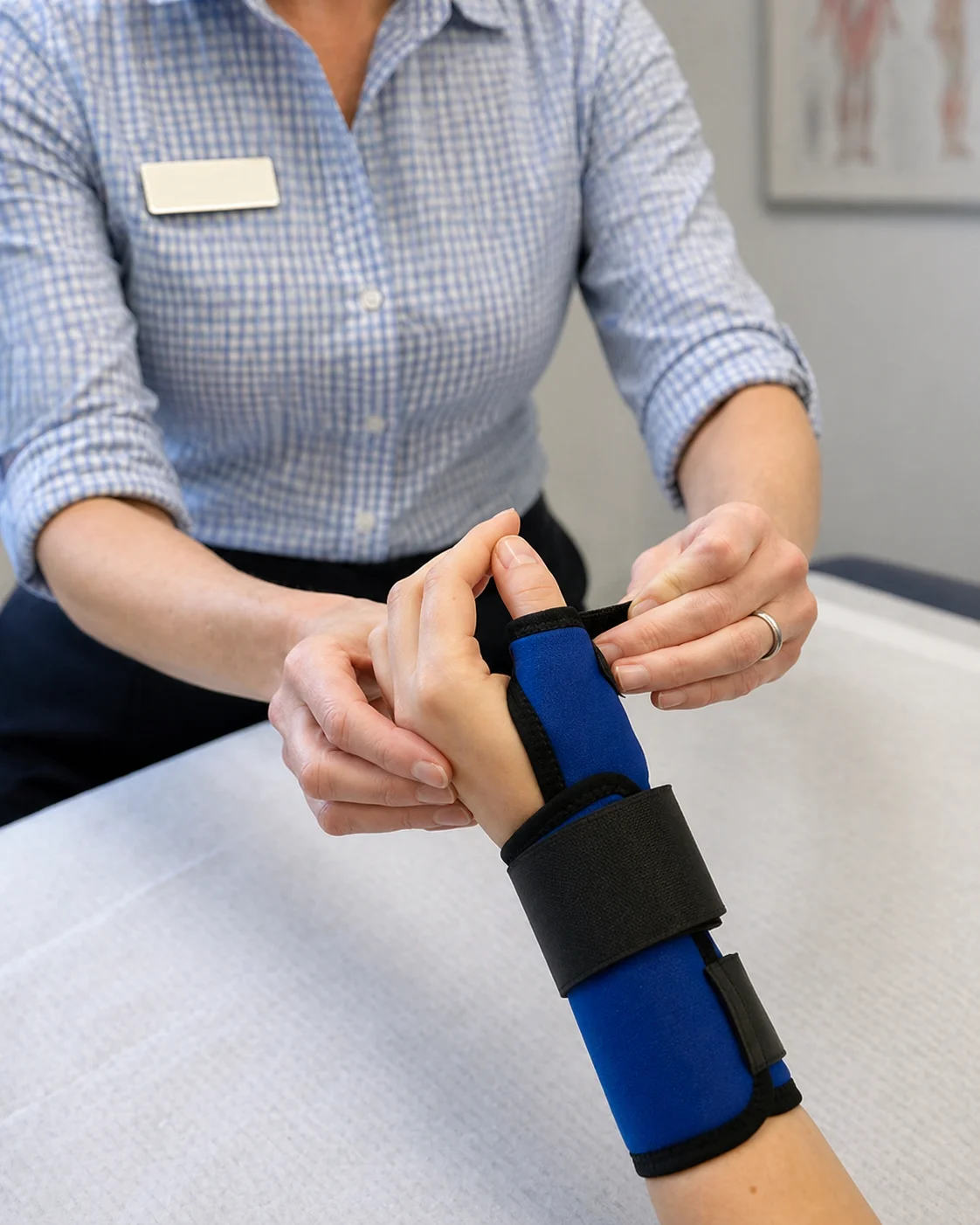
Tenosynovitis of the wrist and thumb — including De Quervain’s — involves inflammation of the tendon sheaths, with pain and swelling along the thumb side of the wrist.
AMIT evaluates the full upper extremity chain, including the shoulder and elbow, to find the muscle inhibition patterns that are overloading the wrist tendons.
Carpal Tunnel Syndrome
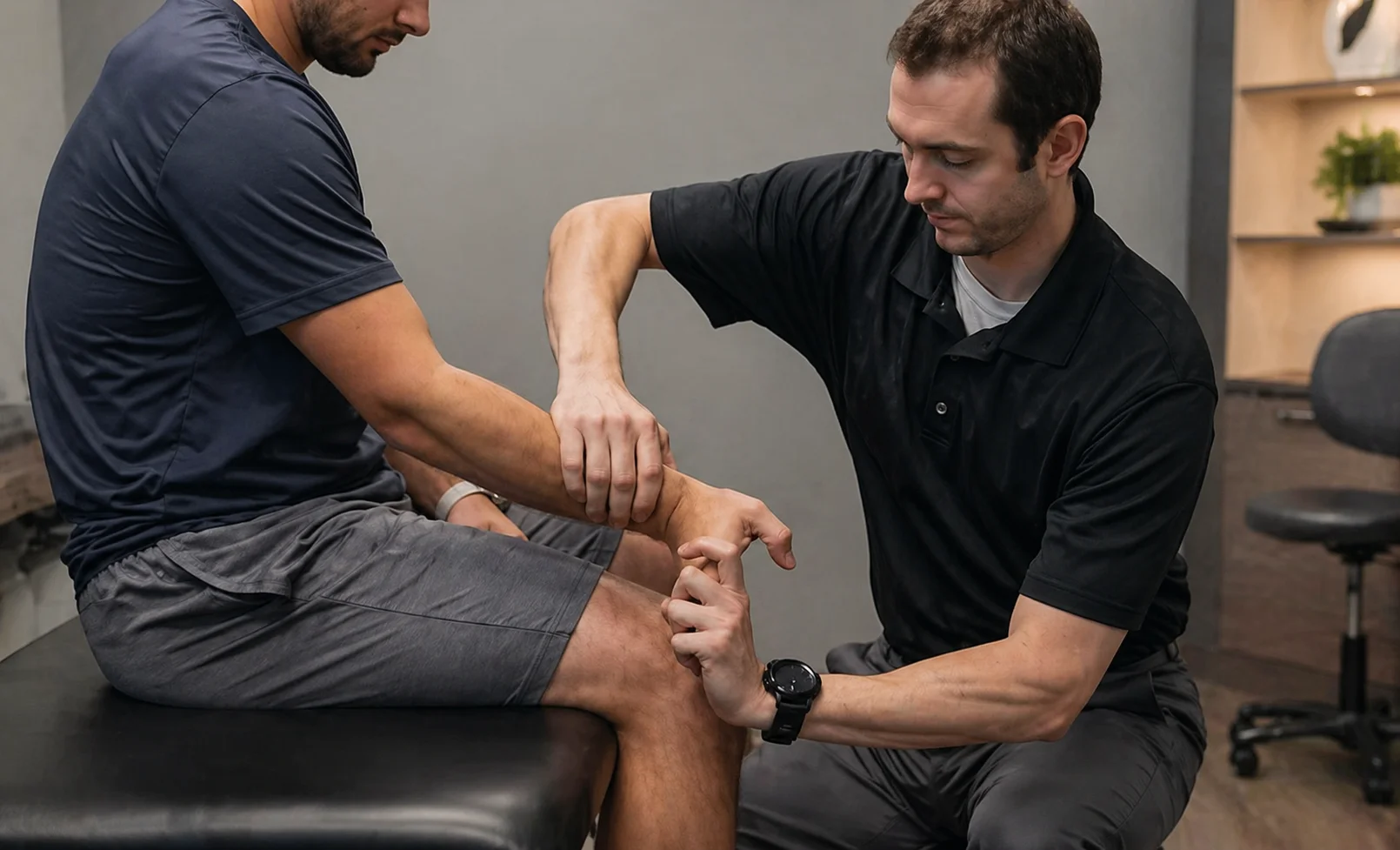
Carpal tunnel syndrome is compression of the median nerve through the carpal tunnel at the wrist — numbness, tingling, and weakness in the hand. It’s often attributed to wrist overuse, but contributing factors frequently include thoracic outlet tension and forearm muscle dysfunction.
AMIT evaluates the full chain from neck to hand, not just the wrist.
Golfer’s elbow is pain and inflammation at the medial epicondyle — the inner bump of the elbow. It affects golfers, but also anyone who grips repeatedly, flexes the wrist, or rotates the forearm.
AMIT restores proper forearm and shoulder muscle activation, reducing the strain on the common flexor tendon.

Tennis Elbow (Lateral Epicondylitis)
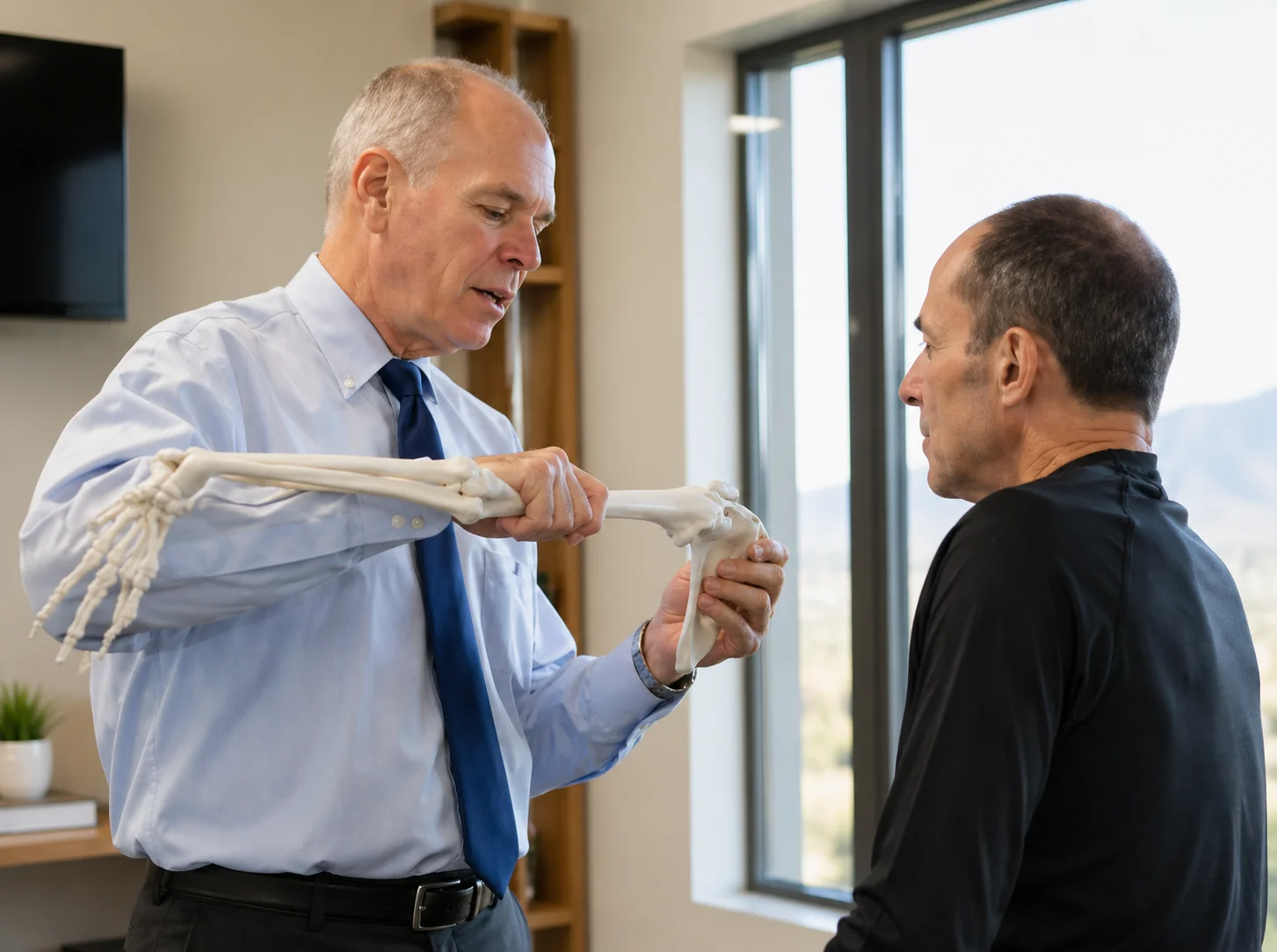
Tennis elbow is pain and degeneration at the lateral epicondyle, where the forearm extensor muscles attach. It’s one of the more common upper extremity problems we see in active adults.
AMIT identifies which muscles along the elbow and shoulder chain are inhibited and restores them — removing the chronic overload that keeps the tendon irritated.