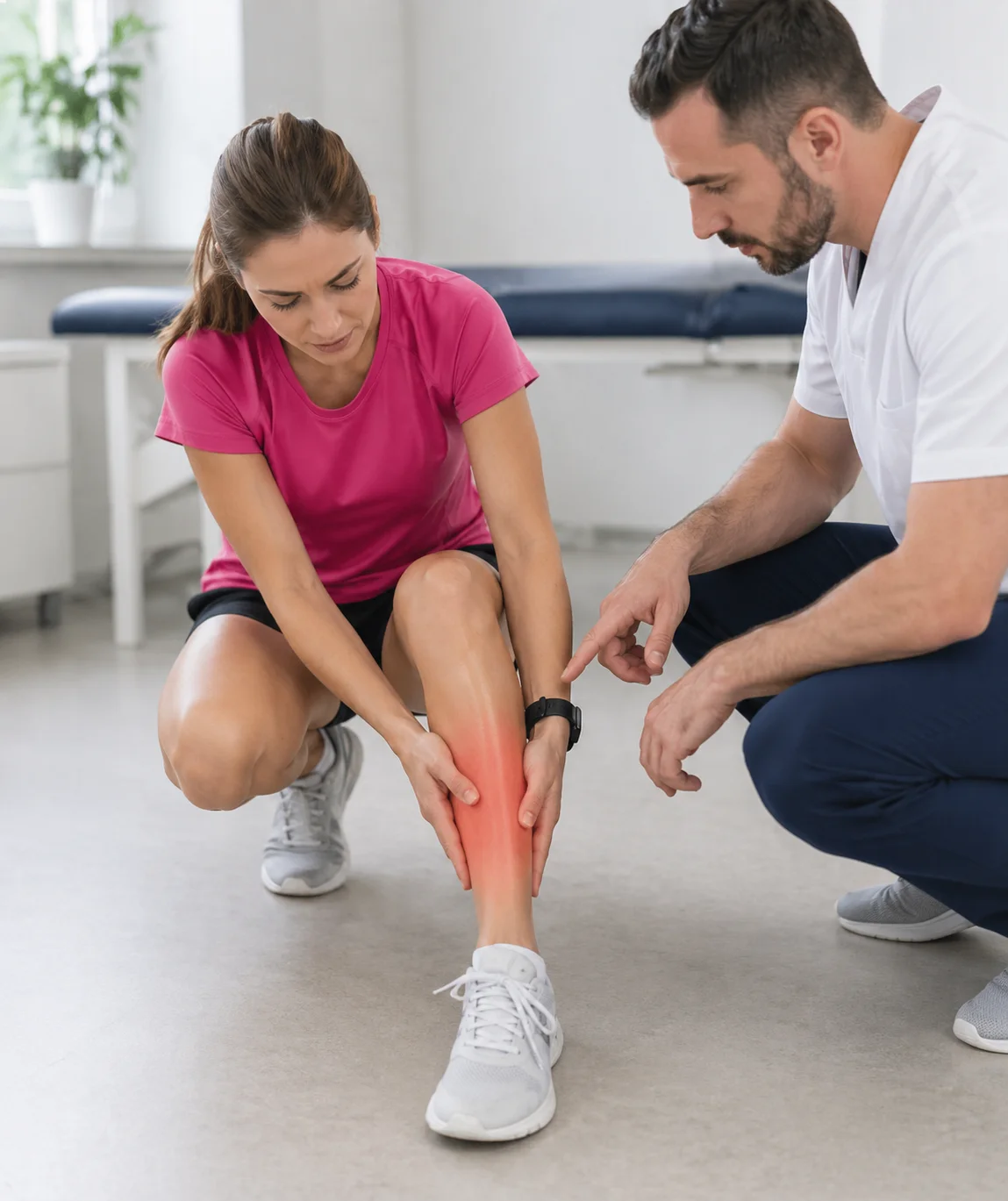
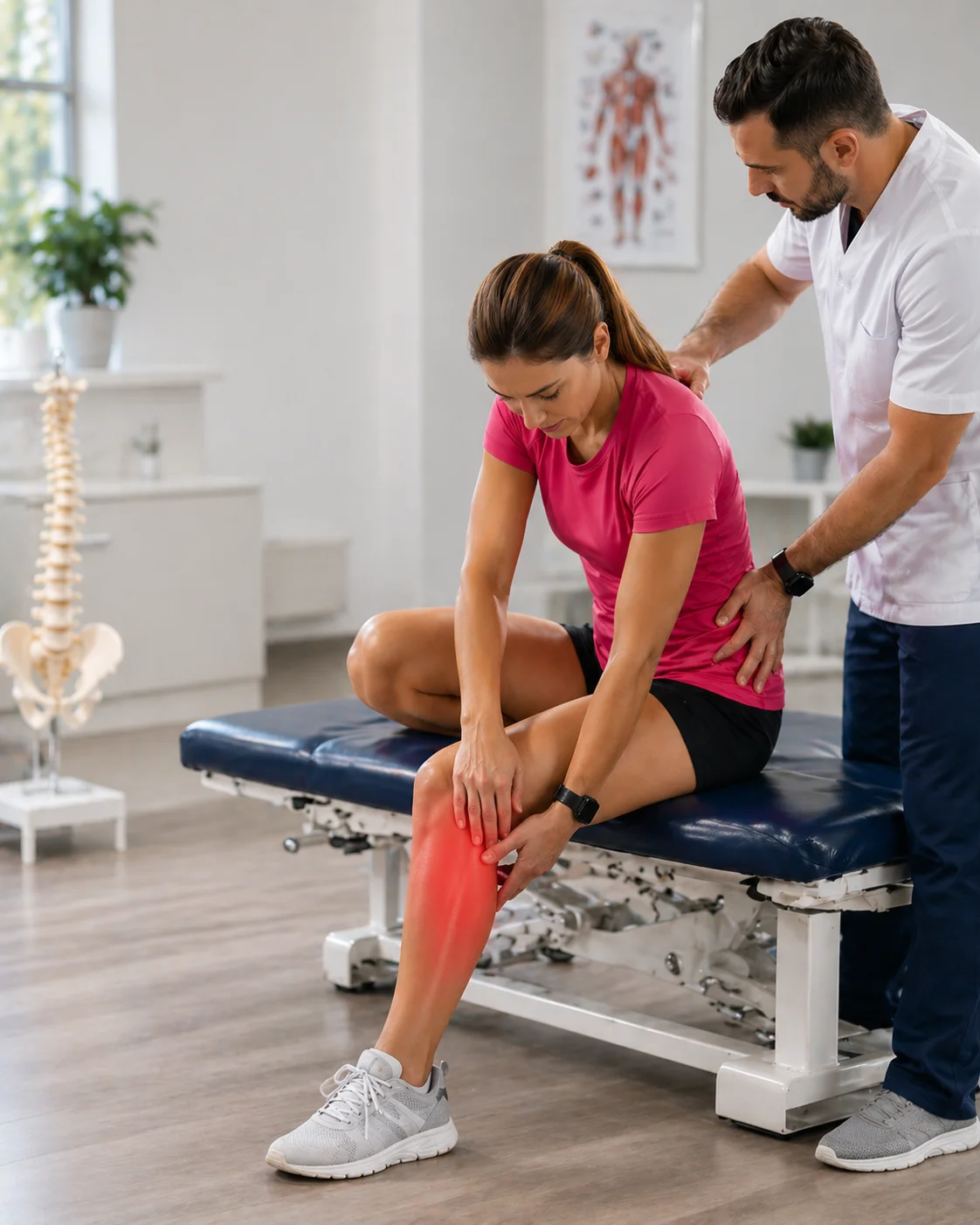
Jumper’s knee — patellar tendinitis — is inflammation of the patellar tendon below the kneecap, driven by repetitive jumping and landing. It’s especially common in basketball, volleyball, and skiing.
AMIT restores quadriceps and hip extensor function, which reduces the chronic overloading on the tendon.
Meniscus Tear
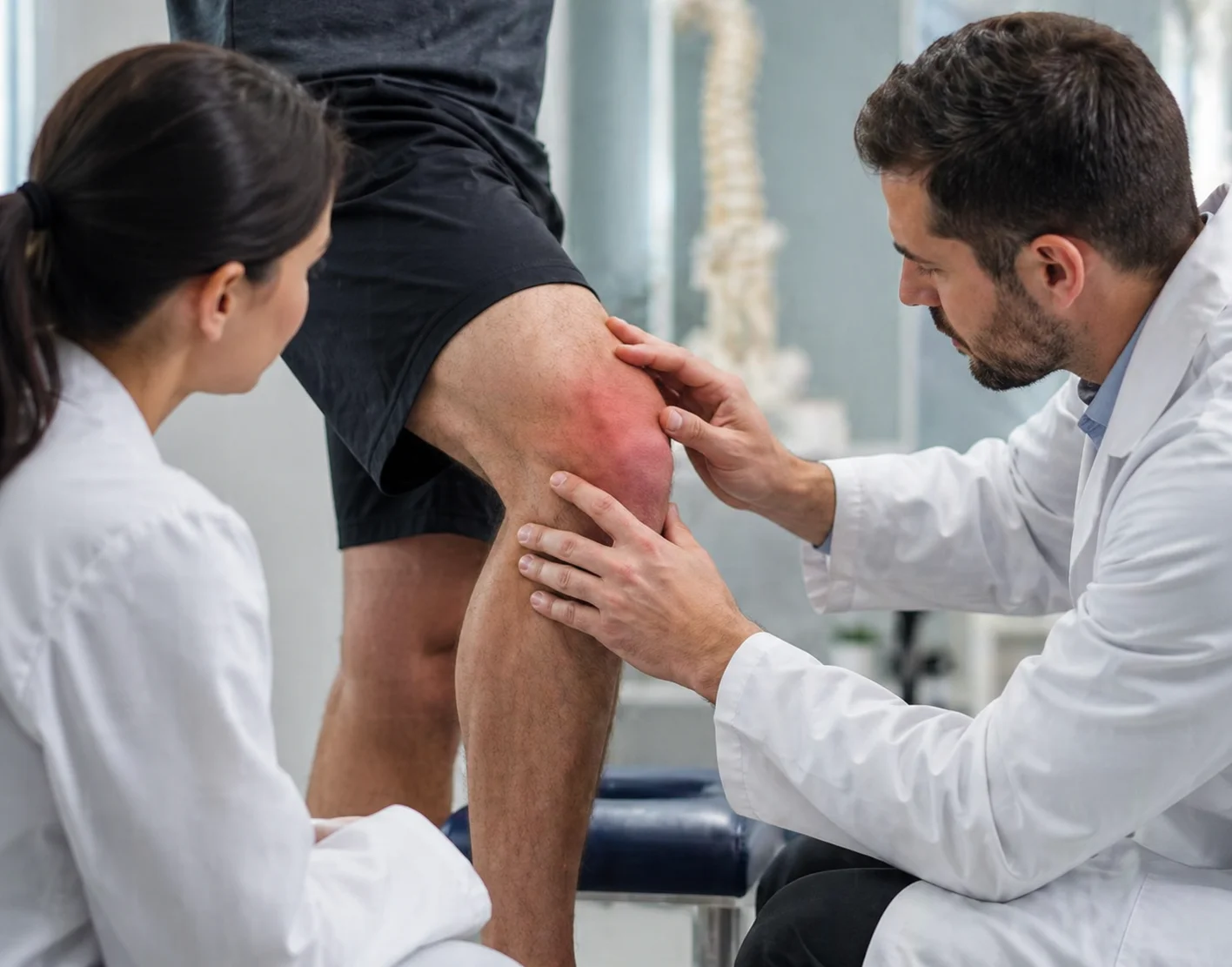
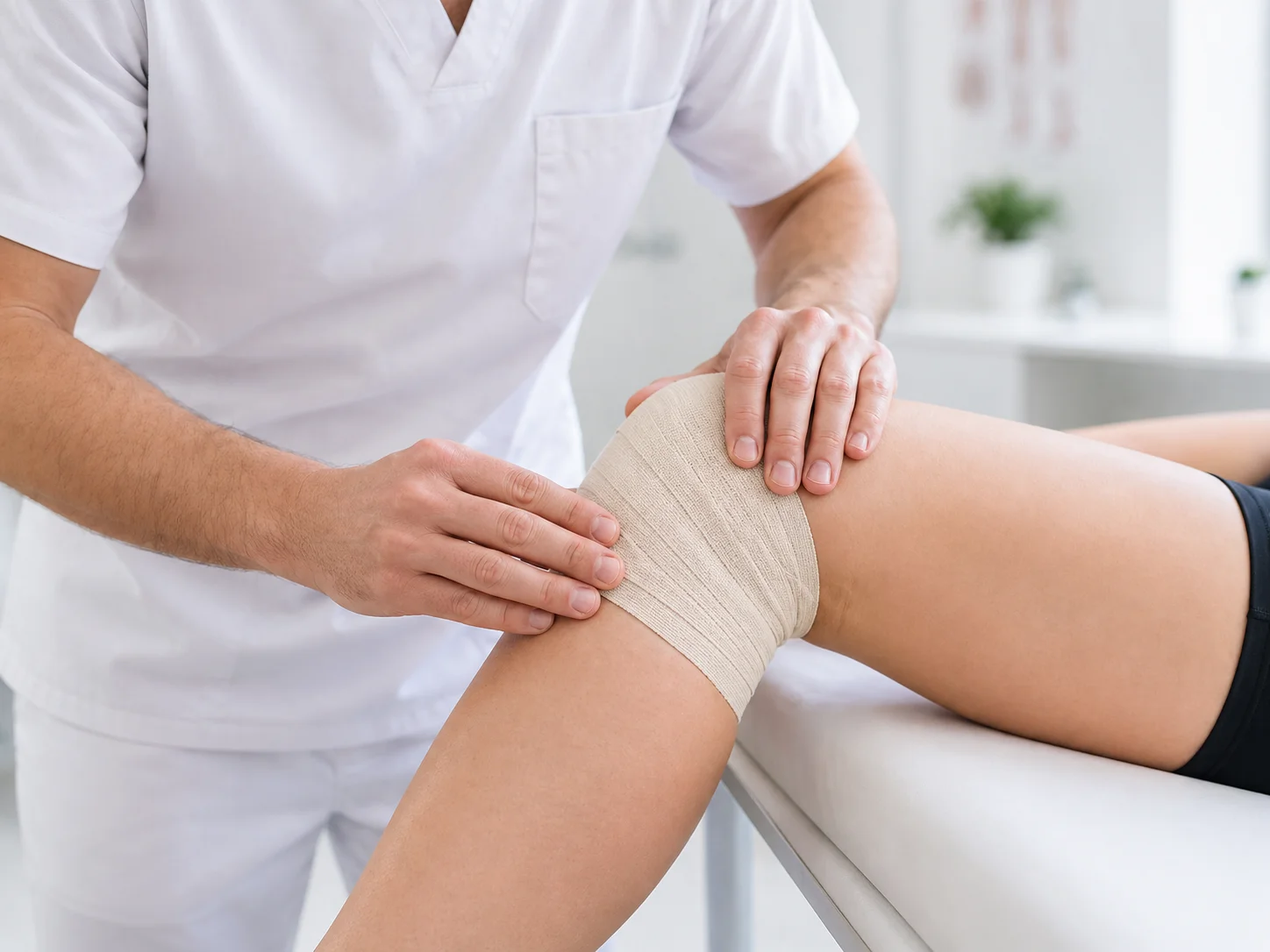
Meniscus tears are among the most common knee injuries — from a twisting motion in sport, or from years of degenerative wear.
AMIT addresses the muscle inhibition patterns in the quadriceps, hamstrings, and hip stabilizers that place excess rotational load on the meniscus, supporting healing and reducing re-injury risk.
An MCL sprain is a stretch or tear of the ligament on the inner side of the knee — typically from a direct blow or a sudden change in direction.
AMIT restores proper muscle activation around the knee joint, stabilizing the MCL during recovery and preventing the compensation patterns that lead to secondary injuries.
ACL / PCL Sprain
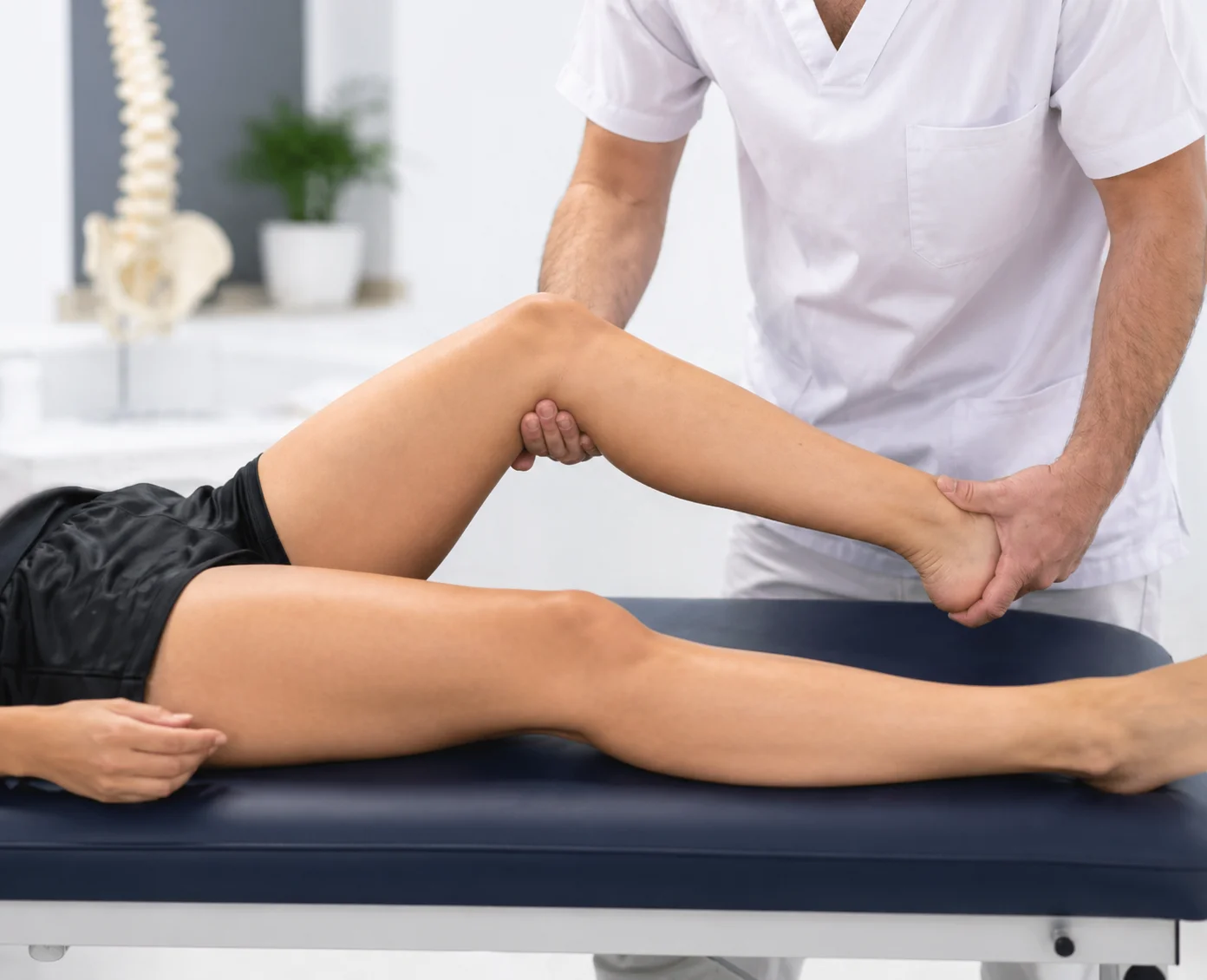
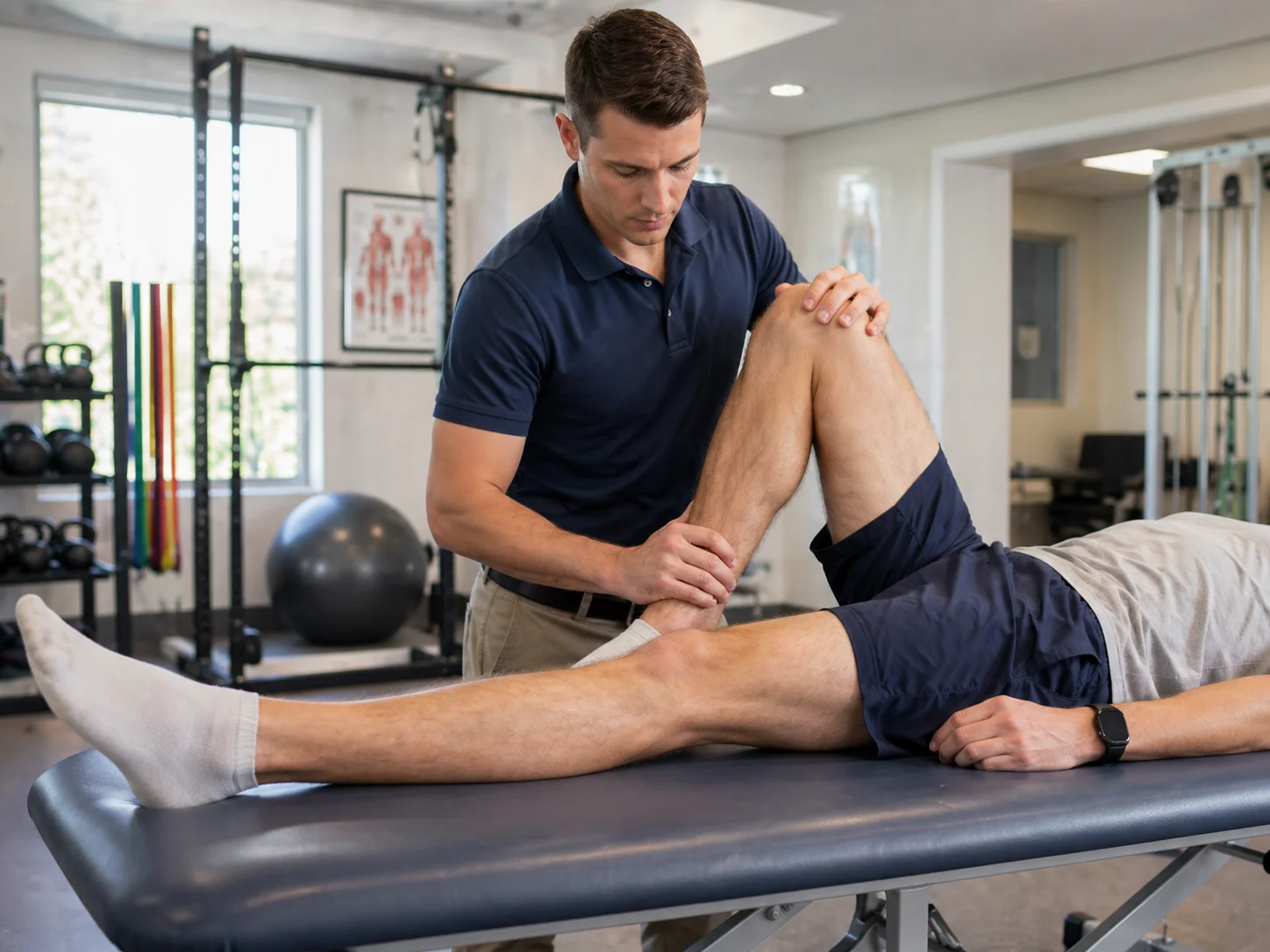
ACL and PCL sprains are serious knee injuries, common in cutting sports and skiing.
Whether you’re in post-surgical recovery or managing a partial tear conservatively, AMIT restores neuromuscular control of the quadriceps, hamstrings, and hip stabilizers — which is what safe return to activity actually requires.
IT band syndrome is a common overuse injury in runners and cyclists — lateral knee pain from friction of the iliotibial band across the lateral femoral condyle. It’s almost always driven by hip abductor weakness and altered biomechanics, not the band itself.
AMIT identifies and restores the specific hip and gluteal muscles that, when inhibited, put the IT band under excessive tension.
Piriformis Syndrome
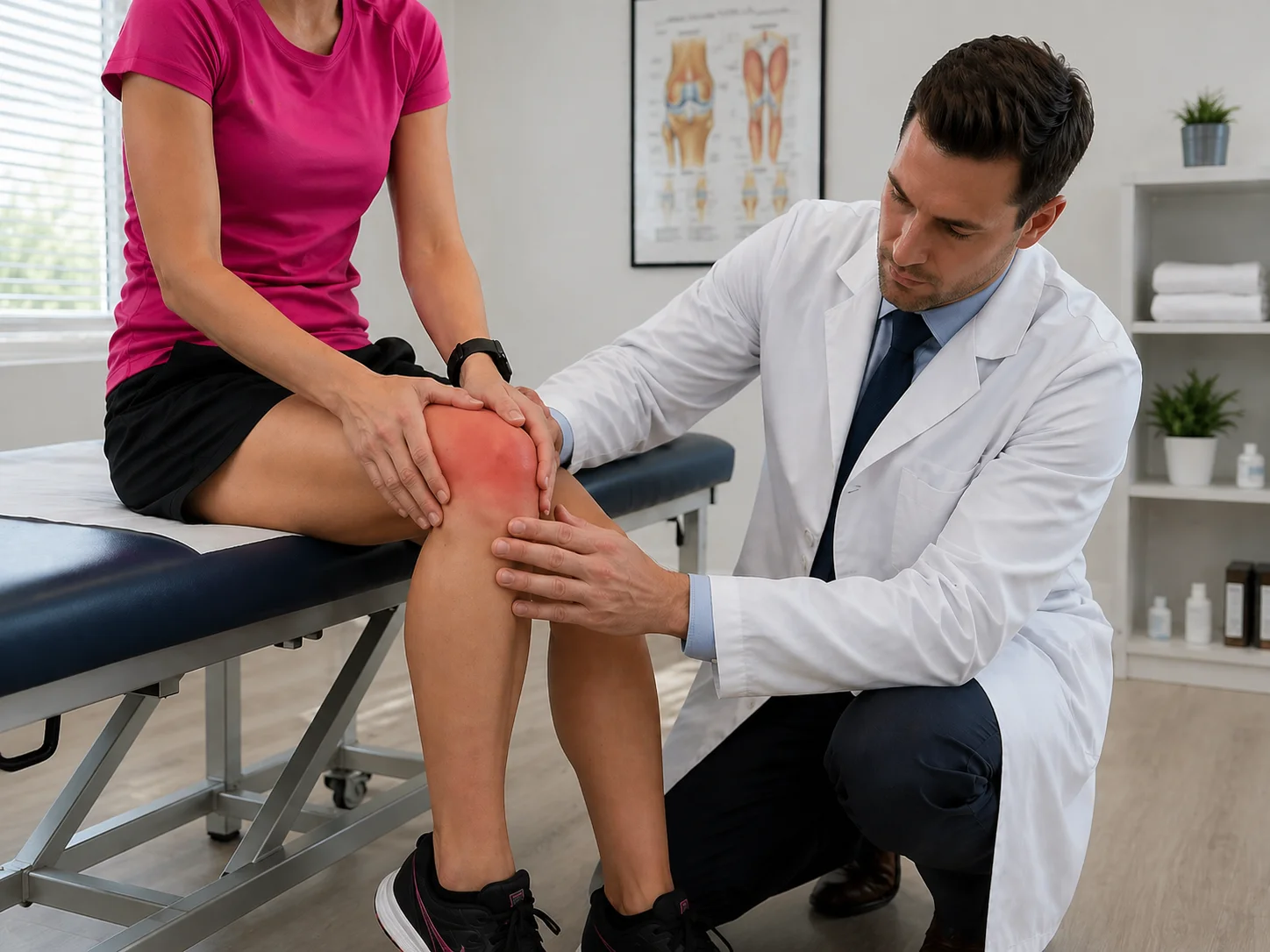
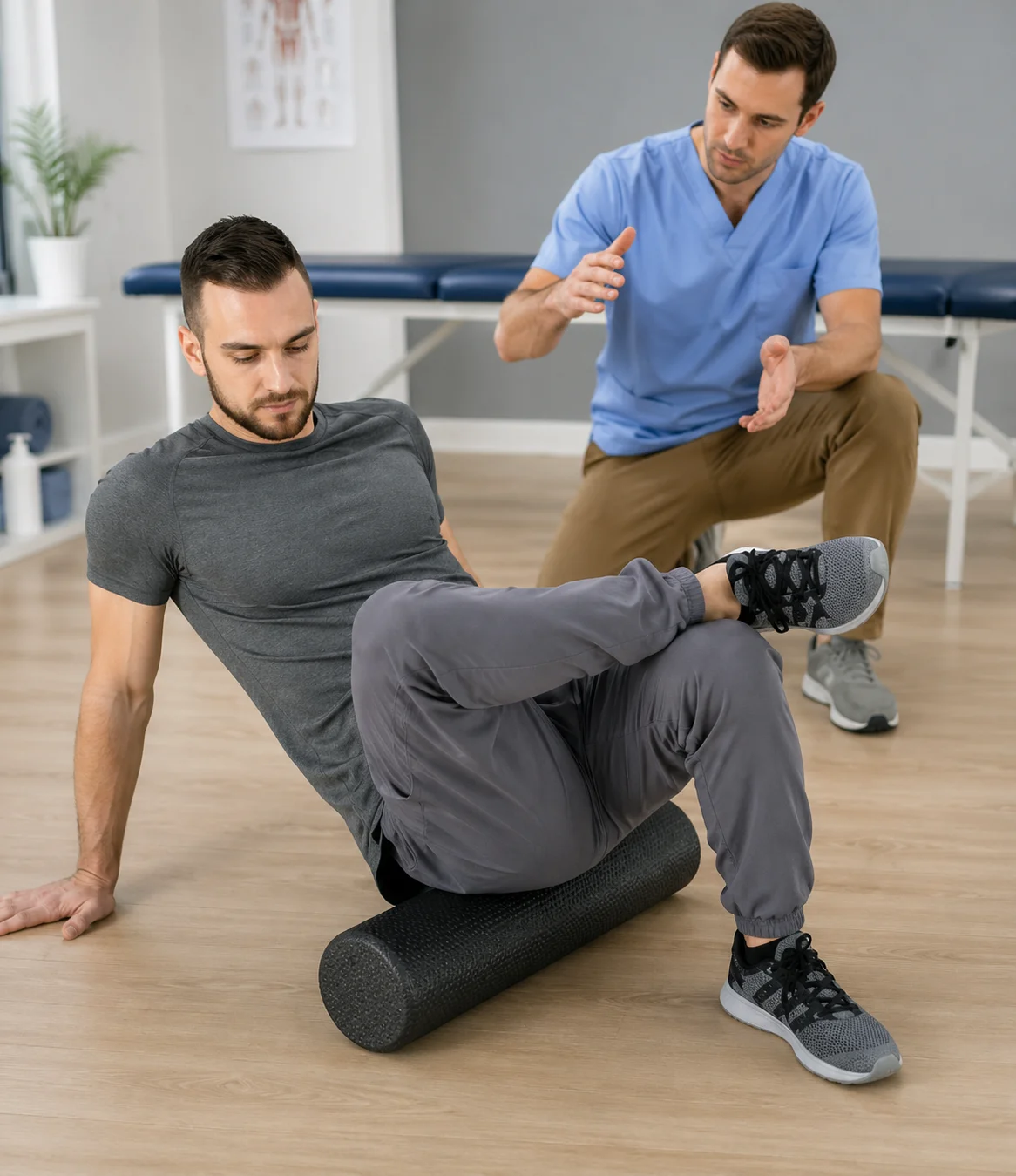
Piriformis syndrome is when the piriformis muscle — a deep hip rotator — tightens or spasms and irritates the sciatic nerve, causing buttock pain and leg symptoms that mimic sciatica.
AMIT evaluates the full hip and lumbopelvic complex to find the inhibited muscles forcing the piriformis into overactivation, and restores balanced function.
Hip bursitis is inflammation of the bursa sac over the greater trochanter — lateral hip pain that gets worse with walking or lying on that side.
AMIT addresses the hip abductor and external rotator muscles that, when inhibited, cause the IT band to rub against the bursa repeatedly. That mechanical pattern is what most cases come down to.
Osteoarthritis of the Hip
Hip osteoarthritis causes joint space narrowing, stiffness, and pain. AMIT doesn’t reverse cartilage loss — that’s worth being direct about.
But restoring the muscle activation patterns that offload the joint can significantly improve function and movement quality, and often delays or reduces the need for surgical intervention.
Hip sprains and strains are common in contact sports and activities with sudden acceleration.
AMIT identifies which muscle groups were injured or inhibited and supports their functional reactivation — speeding recovery and reducing the compensation patterns that lead to problems elsewhere in the lower body.
Hip Dysplasia
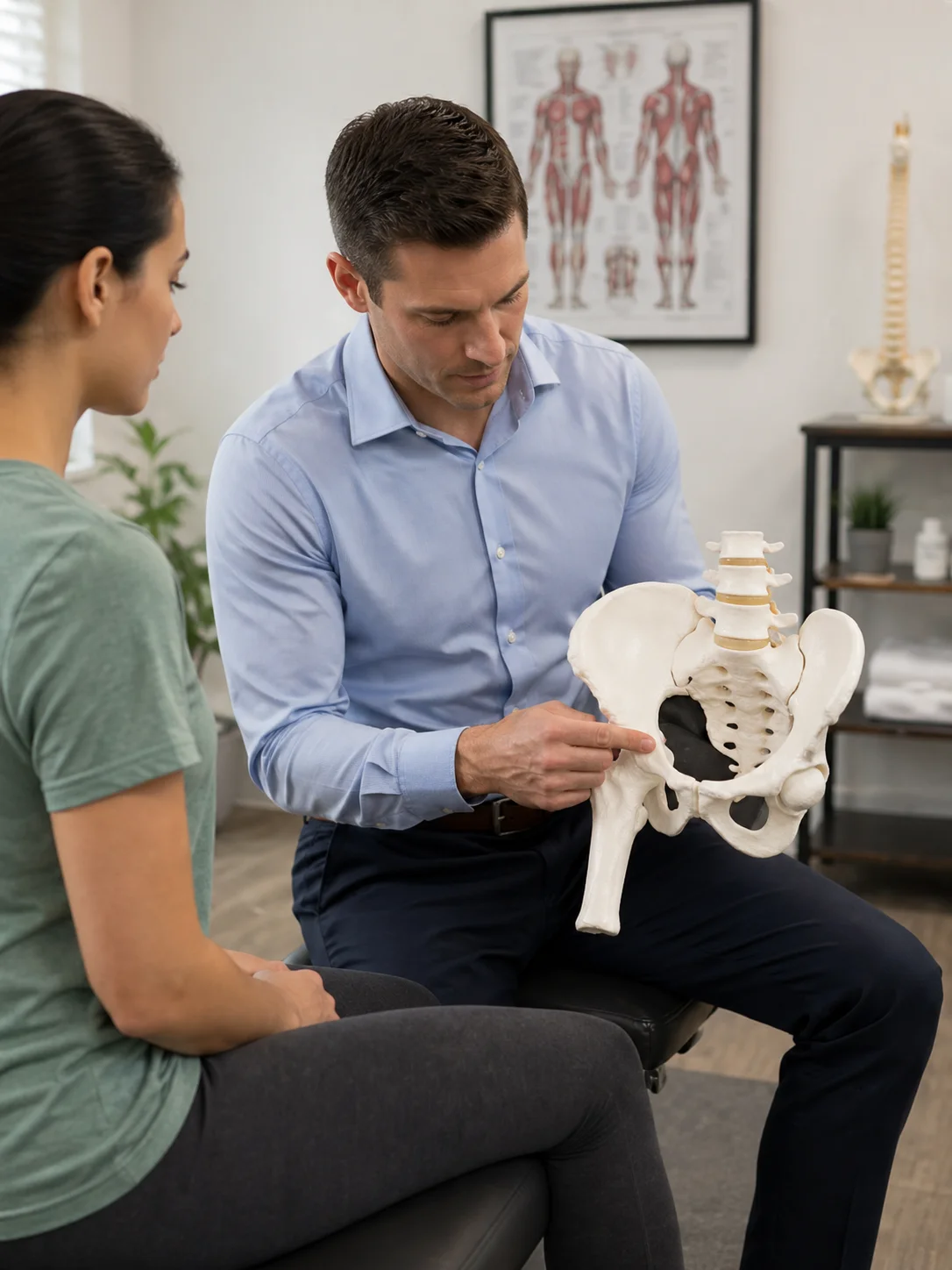
Hip dysplasia is abnormal development of the hip socket that can cause joint instability and early arthritis.
In adults, AMIT focuses on building the strength and neuromuscular control of the hip stabilizers to compensate for the structural deficit — improving daily function and reducing discomfort without surgery.
Shin splints — medial tibial stress syndrome — are lower leg pain from repetitive impact, common in runners, military recruits, and athletes ramping up mileage.
AMIT evaluates the foot, ankle, and hip muscles contributing to tibial stress. Rest helps in the short term, but it doesn’t fix the biomechanical reason they keep coming back.